Egg Powder Supply from India to Nepal
Exploring B2B supply partnerships in Nepal — what importers and food manufacturers should know about DFTQC permits, quarantine, documentation and road logistics when sourcing egg powder from India.
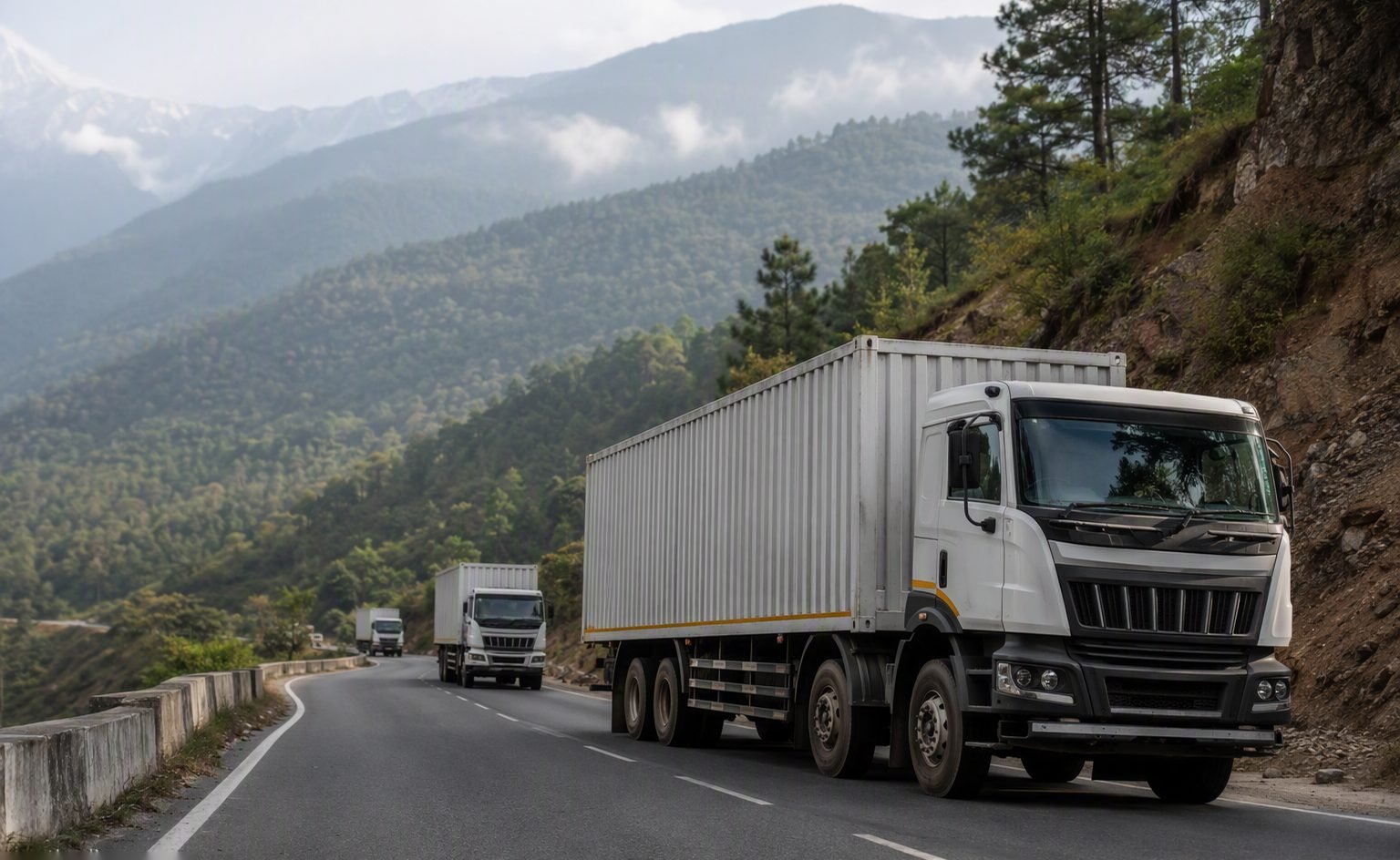
The Nepali market for imported egg ingredients
Nepal is a land-linked market: landlocked, open-bordered with India, and supplied overwhelmingly through Indian trade corridors. Its domestic food manufacturing has grown steadily — instant noodles are a nationally significant industry, alongside biscuits, bakery, confectionery, snacks and a tourism-driven hospitality sector — while domestic ingredient processing capacity remains limited. Imported egg powder fits this picture exactly: a functional, ambient-stable ingredient that moves efficiently by road from Indian production to Nepali factories.
For Nepali manufacturers, sourcing from India is structurally different from importing from anywhere else: shorter lead times, road freight instead of sea containers, a long-established bilateral trade framework, and the practical familiarity both sides' customs and quarantine posts have with India-origin food consignments.
Sahya Agro does not currently claim export history to Nepal. We are exploring B2B supply partnerships with Nepali importers and food manufacturers. We will publish confirmed export markets as partnerships are established — current status: [ACTUAL EXPORT MARKETS].
Import & regulatory considerations for Nepal
Based on current published guidance from Nepali authorities and international trade reporting, the elements importers of egg-derived ingredients typically navigate include:
- Import licensing — the Nepali importing company holds an import licence from the commerce ministry and clears goods through Nepal Customs at designated border points.
- DFTQC food permit — the Department of Food Technology and Quality Control issues import permits for processed foods and inspects or tests consignments against Nepali food standards. Registration and labelling requirements are confirmed with DFTQC per product.
- Animal quarantine (DLS) — livestock products, including egg-derived products, involve the Department of Livestock Services' animal quarantine process: import permission and inspection at border quarantine check posts, with official health certification from the exporting country's veterinary authority process.
- Health & origin documentation — consignments are accompanied by health certificates and certificates of origin; under the bilateral trade framework, India-origin goods move with established documentation practices that your customs agent navigates routinely.
- Labelling — Nepali labelling requirements apply to packaged foods, with provisions your importer confirms for bulk industrial packs.
Requirements differ by product and shipment and are updated over time. Buyers should verify current requirements with DFTQC, DLS, Nepal Customs or their licensed importer before any commitment. Nothing on this page is legal or regulatory advice.
Documentation commonly involved for Nepal shipments
- DFTQC processed-food import permit, obtained by the Nepali importer.
- DLS animal quarantine permission for egg-derived products, with border check-post inspection.
- Official health certificate from the origin country's veterinary authority process.
- Commercial invoice, packing list, transport documents, certificate of origin.
- Specification, batch certificate of analysis, microbiological reports.
- Labelling per Nepali requirements, as applicable to the pack type.
The exact set is confirmed per product and shipment with your importer, DFTQC, DLS and customs.
What Sahya Agro can document today
- Written specifications with batch certificates of analysis for shipped product.
- Microbiological and composition documentation prepared for DFTQC and quarantine review.
- Samples for laboratory evaluation, production trials and any registration or testing process.
Official health and veterinary certificates are obtained through the applicable Indian competent-authority processes per shipment; feasibility and timelines are confirmed during qualification, not assumed. Further certifications remain [CERTIFICATION TO BE CONFIRMED] until verified documents are published.
Buyer Documentation Checklist — Nepal
Use this checklist when planning an import file. It separates paperwork typically required for Nepal-bound consignments from the documents Sahya Agro can supply today — nothing is claimed unless it is verified.
Commonly involved documentation
- Commercial invoice
- Packing information
- Certificate of Analysis (batch-level)
- Product specification
- Certificate / regulatory documentation — health, origin, free-sale and market-specific certificates as applicable
- Shipping documentation
Documentation Sahya Agro can currently provide
- Product specification — available on request
- Batch Certificate of Analysis — issued with shipped batches
- Commercial paperwork prepared together with your importer or freight forwarder
- Samples for laboratory, trial and registration work
Official certificates (health, halal, free-sale and similar) follow the applicable official processes per shipment; feasibility and timelines are confirmed during qualification, not assumed in advance. Further certifications remain [CERTIFICATION TO BE CONFIRMED] until verified documents are published.
Packaging, shipping & Nepal logistics
Egg powder moves as ambient dry cargo in moisture-barrier food-grade packs; formats are [PACKAGING TO BE CONFIRMED] and agreed per order. Nepal-bound supply moves by road through the established India–Nepal trade gateways — major crossings such as the Birgunj–Raxaul corridor handle the bulk of bilateral cargo — with customs and quarantine formalities at the border. No sea leg, no container-port cycle: for a land-linked market, road freight from Indian production is the structural advantage. We publish no transit times or rates; those are confirmed per shipment with transporters and agents.
Practical note for production planners: road-based replenishment suits smaller, more frequent orders than container-scale sea freight allows — powder's shelf life still applies, but the logistics model can be leaner.
Who should engage us in Nepal
Nepali food importers and distributors with DFTQC permit experience; noodle, biscuit, bakery and confectionery manufacturers; and hospitality procurement groups serving the tourism sector. Export MOQ is [ACTUAL MOQ], confirmed per product and destination during qualification — road logistics make trial-scale shipments practical.
Egg ingredients for Nepali buyers
Whole Egg Powder
The general-purpose egg ingredient behind noodle, biscuit and bakery production in Nepal.
View product → SpecialistEgg White Powder
Albumen for aeration-led products — confectionery foams, sponges and protein applications.
View product → SpecialistEgg Yolk Powder
Emulsifying yolk for dressings and mayonnaise, plus richness in dessert production.
View product →Procurement guidance for Nepali buyers
Begin with the permit pair: your import team or agent confirms the DFTQC processed-food permit path and the DLS quarantine requirements for egg powder of Indian origin. We then support product qualification — specification, samples and application trials in your noodle, biscuit or bakery lines — and align health certification and origin documentation before commercial terms. Because road freight compresses lead times, a qualified supplier relationship converts into usable supply faster than sea-freight sourcing models.
Relevant industry guidance: pasta & noodles, biscuits & cookies, bakery, hospitality & HORECA. Application guidance: noodles, biscuits, baking.
Nepal market questions
Yes — through licensed Nepali importers. Processed foods typically require a DFTQC import permit, and egg-derived products additionally involve the Department of Livestock Services' animal quarantine process at border check posts, with official health documentation from the origin country. Your importer confirms the current requirements with the authorities.
The Department of Food Technology and Quality Control issues import permits for processed foods entering Nepal and inspects or tests consignments against Nepali food standards. The Nepali importer obtains the permit; we support with specifications, composition documentation and samples.
Egg-derived products are livestock products under Nepal's system, so they involve the Department of Livestock Services' quarantine process: import permission and inspection at border quarantine check posts, with official health certification issued through the exporting country's veterinary authority process. We arrange the applicable Indian certification per shipment.
By road through the established India–Nepal trade gateways — major crossings such as the Birgunj–Raxaul corridor handle the bulk of bilateral cargo — with customs and quarantine formalities at the border. No sea leg is involved. Exact routing and timelines are confirmed per shipment — [TO BE CONFIRMED].
Structural ones: short road lead times instead of container-port cycles, smaller and more frequent replenishment orders, a long-established bilateral trade framework, and border posts experienced with India-origin food consignments. Product qualification still matters — the logistics advantage only counts once the permit file is in order.
The nationally significant instant noodle industry, biscuit and bakery manufacturers, confectionery producers, and the tourism-driven hospitality sector. Whole egg powder serves noodles, biscuits and general bakery; white powder serves confectionery aeration; yolk powder serves emulsified products.
[ACTUAL MOQ] — export MOQ depends on product, packaging and destination and is confirmed per enquiry. Road logistics make trial-scale shipments more practical than sea-freight sourcing. Samples are available before any commitment.
No. We manufacture in India and deal with Nepali importers and manufacturers directly, claiming no local office, warehouse or distributor. Partnership structures are discussed during qualification.
Speed depends mainly on the DFTQC permit and DLS quarantine file, not on distance — road freight is short once the paperwork is in order. We commit to rapid document and sample turnaround on our side and transparent sequencing, not dates that official processes control.
Sourcing egg ingredients in Nepal?
Tell us the product, expected volume and import-permit scope — we reply with specifications, sample options and a documentation checklist.
Speak with the export team directly: info@sahyaeggpowder.com · WhatsApp: +91 8950846072 · Phone: +91 8950846072