Using Egg Ingredients in Biscuits & Cookies
Richness, colour and dough behaviour — what egg contributes inside biscuit doughs, and how to work with powder formats on commercial lines.
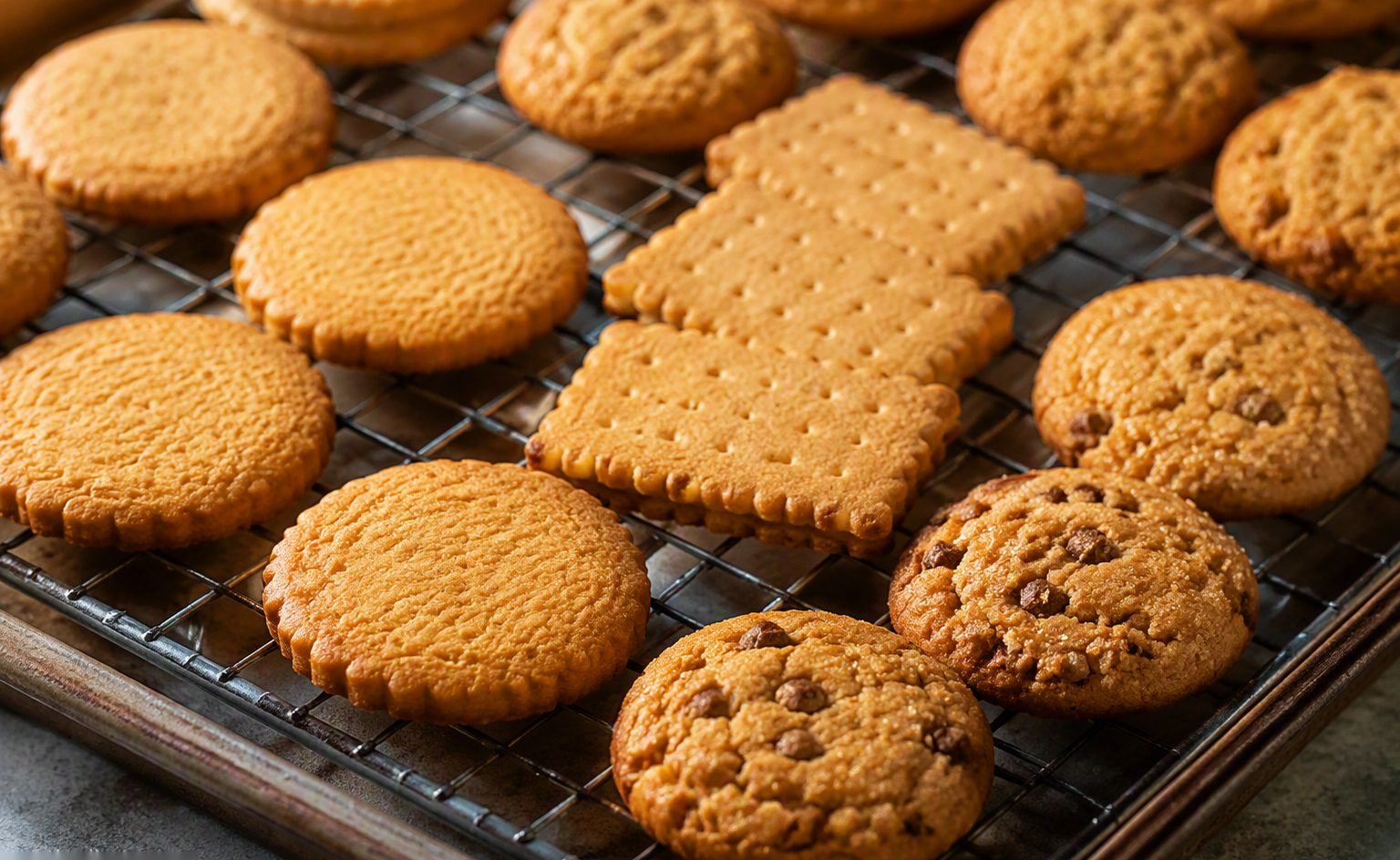
The application: biscuits and cookies
Biscuits and cookies are a dough-and-bake application where egg plays a supporting but meaningful role — quite different from its starring role in cakes. In biscuit systems, flour, sugar and fat define the product architecture; egg contributes richness, colour, flavour and specific processing behaviours depending on the biscuit type. Some biscuits contain generous egg; many contain none at all. This guide covers the egg-containing side of the category honestly.
It deliberately avoids repeating the biscuit industry page, which covers the buyer's perspective — procurement, supplier evaluation and cost-in-use. Here the focus is the product itself: what egg does inside biscuit doughs and how to work with egg formats in commercial biscuit manufacturing.
Where egg ingredients fit in biscuit formulation
Egg's role varies by biscuit family. In soft and wire-cut cookies, egg contributes moisture, binding and richness — helping the dough hold inclusions and bake to a tender, chewy texture. In short doughs and rotary-moulded biscuits, egg enriches and colours; it also affects dough handling at the moulder. In semi-sweet types, smaller egg additions adjust texture and colour. In crackers and water biscuits, egg is typically absent — and saying so plainly matters more than pretending otherwise.
Where egg is used, its contributions are: binding (proteins set during baking and help the biscuit hold together), colour (yolk pigments plus egg solids' browning reactions give the golden surface consumers expect), flavour (the characteristic baked richness), and texture modification (tenderness in soft types, snap adjustments in drier types through protein contribution).
Direct-answer: why do manufacturers use egg ingredients in biscuits?
For richness, golden colour and flavour in egg-positioned products — and for dough handling benefits in soft and moulded types. Egg powder delivers these without shell handling, breakage loss or refrigerated storage, at consistent composition batch after batch.
Which Egg Ingredient May Fit?
Potentially relevant ingredients for evaluation include Whole Egg Powder, Egg White Powder and Egg Yolk Powder. Final ingredient selection depends on formulation, process and customer requirements.
Egg products for biscuit production
Whole Egg Powder
Balanced protein and yolk for soft cookies, short doughs and general biscuit enrichment — dry-store convenience for the mixing room.
View product → SpecialistEgg Yolk Powder
For extra-rich short doughs and colour-forward recipes where yolk's pigment, fat and emulsification lead.
View product → SpecialistEgg White Powder
Protein functionality without added fat — for specialised recipes adjusting texture and snap, and for wafer-type batters where relevant.
View product →Functional considerations in biscuit systems
- Dough consistency — egg adds water and solids; format changes (fresh → powder) require water rebalance to hold dough rheology at the former or moulder.
- Structure and binding — coagulated egg protein helps soft cookies and moulded biscuits hold shape and inclusions through baking and packing.
- Texture — yolk fat tenderises; white protein can firm and adjust snap. The egg fraction you choose moves texture in different directions.
- Colour — yolk carotenoids for dough and crumb colour; egg solids for surface browning. Colour tracks dosage and bake profile together.
- Flavour — egg rounds and enriches the baked flavour profile; particularly noticeable in butter-style and vanilla-forward biscuits.
- Spread — in wire-cut and deposited cookies, egg level interacts with sugar and fat to influence spread; adjust in trials, not by assumption.
Formulation considerations
Water rebalance is the first task. Converting a biscuit formula from liquid or fresh egg to powder means removing egg water from the dough system and replacing it deliberately. The TDS reconstitution ratio gives the arithmetic; the dough's behaviour at the sheeter, moulder or wire-cut confirms it. Exact ratios publish with the TDS [SPECIFICATION TO BE CONFIRMED] — validate in bench and line trials before locking the formula.
Dry dosing suits biscuit lines. Biscuit mixing rooms commonly dry-dose egg powder with the flour phase and adjust added water — practical, fast, and kind to hygiene because no liquid egg handling is required. Where recipes call for pre-rehydration (some soft-cookie systems), treat reconstituted egg as perishable.
Processing consistency. Biscuit lines are unforgiving of dough variability: a dough that arrives at the moulder wetter or drier than standard shows up immediately as weight and shape drift. Standardised powder composition — same solids, same moisture, batch after batch — removes one variability source from that equation.
Processing considerations
Watch the interaction points: mixing (powder dispersion through the flour phase; creaming-stage behaviour in short doughs), forming (dough rheology at the moulder, wire-cut or sheeter), and baking (colour development follows egg-solids dosage and oven profile together). None of this prescribes your parameters — it marks where to look during conversion trials.
Powder vs liquid vs fresh in biscuit manufacturing
Powder fits biscuit production particularly well: dry dosing matches dry-ingredient handling, dry-store logistics match the mixing room, and long shelf life suits the category's production planning. Liquid egg appears in soft-cookie plants with high throughput and cold storage, where it skips rehydration. Fresh egg is rare at industrial biscuit scale for good operational reasons.
The choice remains operational, not hierarchical — powder's logistics advantages are real, but a plant built around liquid handling may rationally stay liquid. Both formats deliver the same formulation functions when used correctly.
Procurement considerations
- Specification — written parameters each batch ships against; composition consistency is what keeps your dough consistent.
- COA per batch — composition and micro results for your QC file.
- Micro standards — validated pasteurisation; request the supporting documentation.
- Packaging — [PACKAGING TO BE CONFIRMED]; sizes matched to batch usage so opened stock turns quickly.
- MOQ & shelf life — [ACTUAL MOQ]; shelf life per TDS [SPECIFICATION TO BE CONFIRMED].
- Storage & shipping — dry, cool, sealed; dry-cargo freight — [TO BE CONFIRMED] per order.
Quality & food safety: what to evaluate
Beyond the universal checks — pasteurisation validation, micro testing, traceability — biscuit manufacturers should track functional consistency in their own doughs: colour, flavour and dough behaviour across incoming lots. Powder that holds composition holds your process; that consistency is what your trials should verify.
Our approach is described on the quality page. Certifications remain [CERTIFICATION TO BE CONFIRMED] until verified documents are published.
Biscuits application questions
For richness, golden colour, flavour and binding in egg-positioned products — soft cookies, short doughs and filled types. Egg powder delivers these functions with dry-store logistics and consistent composition, without shell handling or refrigeration.
No. Many biscuit types — crackers, water biscuits, most digestives — contain no egg at all. Egg features in soft cookies, short doughs, some semi-sweet and premium types. Dosage and format follow the biscuit type and its positioning.
Yes — dry dosing with the flour phase is standard practice in biscuit mixing rooms, with the corresponding water added separately per the TDS reconstitution ratio. Validate dough consistency at your former or moulder during conversion trials.
Yolk carotenoids colour the dough and crumb; egg solids participate in surface browning reactions. Colour tracks dosage and bake profile together — adjust in trials when converting formats or changing egg levels.
Yes — yolk fat tenderises, while egg white protein can firm texture and adjust snap. The fraction and dosage you choose move texture in different directions, which is why rich short doughs and protein-adjusted recipes use different egg components.
Properly rebalanced, it holds dough rheology steady — and its standardised composition removes one source of batch-to-batch dough variability. Get the water rebalance wrong, and the moulder or wire-cut will tell you immediately.
Written specification, COA per batch, validated pasteurisation and micro standards, composition consistency across lots (verified in your own doughs), and packaging integrity.
Long ambient shelf life compared with liquid egg — supporting the category's production planning and stock security. Confirmed values publish with the technical data sheet [SPECIFICATION TO BE CONFIRMED].
[ACTUAL MOQ] — MOQ depends on packaging and delivery location and is confirmed per enquiry. Samples are available for dough trials.
Manufacturing biscuits or cookies?
Share your biscuit type, process and volumes — we respond with specs, samples and pricing.