Egg Ingredients for Commercial Bakeries
Structure in sponge, richness in pastry, gloss on the finished loaf — egg does more jobs in bakery than any other single ingredient. Here is how industrial bakeries buy it well.
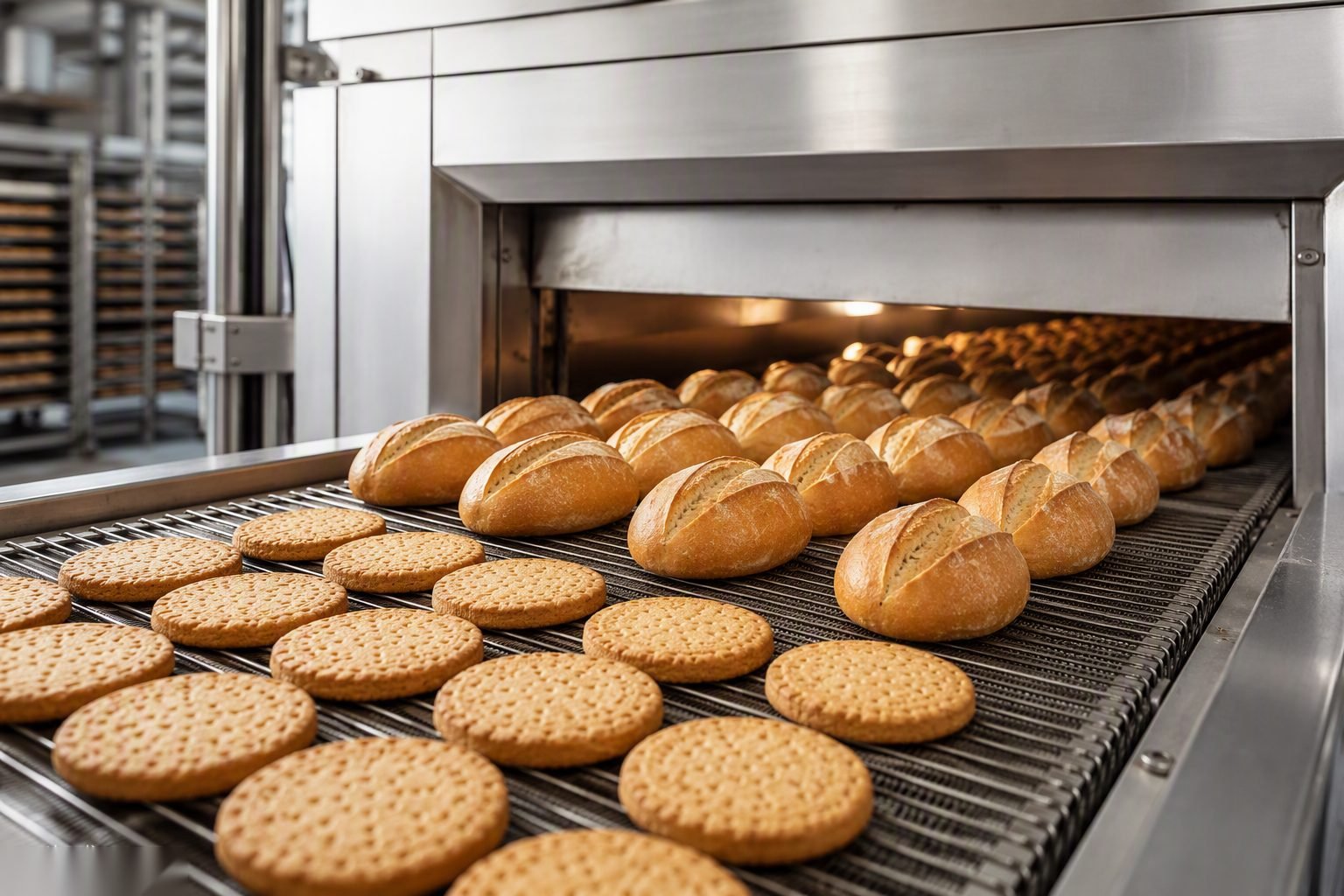
The industrial bakery's ingredient reality
Commercial bakery is a volume business with artisan expectations. Whether the line produces sandwich bread, celebration cakes, muffins, croissants or private-label premixes, the buying problem is the same: deliver artisan-style texture, volume and flavour at industrial throughput, at a cost-in-use the category can bear, with consistency that survives every shift of every day.
Egg sits near the centre of that problem. It is one of the oldest functional ingredients in baking — and one of the few that influences structure, aeration, emulsification, colour, flavour and perceived freshness all at once. It is also, in shell form, one of the most awkward ingredients on the factory floor: fragile, perishable, variable in composition, and demanding in hygiene and labour. That tension is exactly why egg powders and pasteurised liquid egg exist, and why most industrial bakeries now buy at least part of their egg in processed form.
This guide covers where egg ingredients earn their place in bakery production, which formats suit which products, and what bakery procurement teams should verify before choosing a supplier.
From Industry Requirement to RFQ
1 · Industry requirement
Typical need: structure, volume and richness in baked goods. Define your process conditions, volumes and destination before selecting an ingredient.
2 · Relevant egg ingredients
Potentially relevant ingredients for evaluation: Whole Egg Powder, Egg Yolk Powder, Egg White Powder. Final selection depends on formulation, process and customer requirements.
3 · Technical information
Review the buyer specification summary and the specification guide; product specifications are provided per product on request.
4 · RFQ
Share your requirement, destination and documentation needs through the RFQ form — or request a sample first.
Where egg ingredients fit in bakery formulations
Egg's bakery value comes from a bundle of mechanisms working together. During mixing, egg proteins and yolk lecithin help batters trap and hold air — the foundation of sponge and cake volume. During baking, those same proteins coagulate at predictable temperatures, setting the crumb around the air cells the mixing stage created. Yolk lipids tenderise and enrich, carotenoids warm the crumb colour, and residual egg solids support the Maillard reactions that give crusts their golden finish. On the outside of the product, an albumen-based glaze delivers the glossy sheen consumers read as "fresh from a good bakery."
Few ingredients influence so many quality attributes simultaneously, which is why egg reduction programs in bakery tend to be cautious: removing egg touches volume, texture, colour and flavour in one move. For most bakeries the more productive question is not whether to use egg, but in which format — shell, liquid or powder — and from which supplier.
Direct-answer: why do food manufacturers consider egg powder?
Because powder converts a fragile, variable, cold-chain-dependent raw material into a standardised dry ingredient: identical composition batch to batch, ambient-friendly storage, precise scaling by weight, no breaking room, and freight-friendly logistics for plants far from egg production. In return, the formulation absorbs one extra variable — the water that powder removes — which process water restores.
Sahya Agro products for bakery
Recommended only where there is a legitimate application reason.
Whole Egg Powder
The bakery workhorse: structure, richness, colour and flavour in one shelf-stable ingredient for cakes, muffins, cookies, pastries and premixes.
View product → SpecialistEgg White Powder
For foam-dependent products — angel and chiffon cakes, meringue components — plus protein enrichment and high-gloss bakery glazes.
View product → SpecialistEgg Yolk Powder
For enriched doughs, brioche-style products, pastry creams and fillings where extra emulsification, colour and richness define the product.
View product →Bakeries within cold-chain range of production may also evaluate liquid whole egg and liquid egg white for pour-and-mix convenience on high-throughput lines. Liquid-range availability is [PRODUCT AVAILABILITY TO BE CONFIRMED].
Application breakdown by bakery category
Cakes and sponge products
Sponge and butter cakes are egg's structural showcase: volume from aeration, set from protein coagulation, fine crumb from emulsified fat. Whole egg powder suits most butter-style cakes and muffins; foam-dependent sponges and angel cakes lean on egg white powder's whipping. Powder dosing keeps batter specific gravity stable across shifts — the parameter cake lines watch most closely. Conversion from shell egg means restoring the removed water as metered process water and validating volume in pilot bakes.
Cookies and soft-baked biscuits
In cookie doughs, egg contributes binding, spread control and a tender bite, with yolk enriching short doughs. Low-moisture systems make powder the natural format — liquid egg complicates an already tight hydration budget. See our biscuits industry guide for the drier end of this category.
Pastries, croissants and enriched doughs
Brioche, challah, Danish and croissant-style products are defined by enrichment — yolk's fat, lecithin and colour working alongside butter. Egg yolk powder standardises that enrichment; whole egg powder covers general pastry needs. An albumen glaze before baking delivers the signature glossy finish on buns, loaves and puff-topped products.
Bakery premixes and concentrates
Premix manufacturers are among the biggest egg powder users in the supply chain, because every ingredient in a premix must be dry, free-flowing and shelf-stable. Whole egg powder anchors cake and muffin mixes; egg white powder powers meringue and foam-cake mixes. Dosing precision by weight — impossible with shell eggs — is the entire business model here.
Baked snacks and savoury bakery
Savoury crackers, breadsticks and baked snack bases use egg for binding and surface colour where recipes call for it, typically at lower inclusion rates than sweet bakery — but with the same consistency requirements.
Functional considerations for bakery technologists
- Egg solids and water balance — powder delivers the solids; the formulation must restore the water fresh egg would have contributed. Lock the rehydration or water-adjustment step into the master recipe, not operator habit.
- Protein functionality — coagulation temperature and gel strength drive crumb set. Consistent protein content in powder means consistent set across batches.
- Foaming and aeration — for whipped systems, albumen quality decides volume and foam stability; guard against fat contamination in mixing equipment.
- Emulsification — yolk lecithin stabilises fat-in-batter systems, supporting fine, even crumb in high-fat cakes and enriched doughs.
- Colour and flavour — carotenoids and yolk lipids carry much of the "made with real egg" sensory signature; verify in finished-product trials, not just in the bowl.
- Freshness perception — egg solids contribute to softness retention over shelf life, a commercial factor for packaged bakery lines.
Sahya Agro publishes [ACTUAL PRODUCT SPECIFICATION] values — protein, fat, moisture, microbiological limits — with each product's technical data sheet once verified; samples support your own functional benchmarking before commitment.
Powder vs fresh egg: an honest comparison for bakeries
Powder is not universally "better" — it is better at specific things, and the right answer depends on your plant. Powder wins on consistency (no seasonal or flock-age variation), storage (no cold room full of a fragile ingredient), hygiene (no breaking operation, no shell waste stream), planning (long shelf life smooths purchasing), and freight (the only practical format for distant supply). Fresh shell eggs can still make sense for very small artisan operations with local supply and low daily volumes, and liquid egg suits high-throughput plants within cold-chain range that want to skip rehydration.
Many industrial bakeries run a mixed strategy: powder for premix and dry-side operations, liquid for continuous high-volume lines, and a shrinking shell-egg operation only where a specific product genuinely demands it. The deciding variables are daily egg volume, chilled storage capacity, distance from supply and how much breaking labour the plant still wants to carry.
Procurement guide for bakery buyers
- Specification sheet — protein, fat, moisture, solubility and physical standards in writing; every batch ships against it.
- COA per batch — verify COAs match the spec, and agree which micro parameters matter for your category.
- Microbiological requirements — pasteurised product with documented Salmonella control; bakery fillings and no-bake applications may justify tighter scrutiny.
- MOQ and lead time — [ACTUAL MOQ] and lead times confirmed per enquiry; align order cycles with your production planning horizon.
- Shelf life and storage — confirmed limits on the TDS [SPECIFICATION TO BE CONFIRMED]; plan FIFO rotation accordingly.
- Shipping and documentation — batch identity, traceability and export papers where applicable.
- Samples before volume — validate in your own recipes; our team supports dosage and rehydration questions.
Quality & food safety: what to evaluate
Bakery buyers should look past the certificate wall to the operating disciplines behind it: pasteurisation validation, hygienic zoning between raw and dried product, environmental monitoring, metal detection, retained samples and a traceability system that can isolate any batch quickly. Ask how the supplier handles complaints and how fast batch documentation can be produced.
Sahya Agro's approach is described on our quality page. Certification claims remain [CERTIFICATION TO BE CONFIRMED] until verified documents are published — we will not show badges we cannot document.
Formats to match intake
Packaging options are being finalised — [PACKAGING TO BE CONFIRMED]. We will recommend formats against your batch sizes and intake setup during quotation.
Standard dry warehouse
Egg powders store in normal dry-ingredient conditions — cool, dry, sealed, off the floor, FIFO rotation. No cold room required.
Freight-friendly
Dry-cargo shipping with no refrigeration; pallet and container configurations confirmed per order — [TO BE CONFIRMED].
Export considerations for bakery buyers
For bakeries outside India, powder is the practical format: no refrigerated containers, no shelf-life race against shipping time. Export orders are prepared with batch COA, product documentation and shipping papers; destination-specific requirements (label declarations, import permits, food authority registrations) should be raised early in the enquiry so documentation can be planned. Verified destination list: [ACTUAL EXPORT MARKETS]. More on our global supply page.
Bakery buyer questions
Whole egg powder is the most common bakery choice because it delivers structure, richness and colour in one ingredient. Egg white powder is used for foam cakes, meringue-based products and glazes; egg yolk powder for enriched doughs, pastries and fillings where extra richness and emulsification are needed.
Egg proteins set with heat to build the cake's structure, trap and stabilise air during mixing for volume, emulsify fat into the batter for a fine crumb, and contribute the golden colour and rich flavour consumers associate with quality cakes.
In most industrial bakery applications, yes — with dosing adjusted for the water that powder removes from the system. Bakeries typically validate sponge volume, crumb texture and bake behaviour in pilot trials when converting from shell or liquid egg.
It depends on the cake. Butter cakes, pound cakes and muffins benefit from whole egg powder's balanced fat and protein. Angel food and chiffon-style cakes depend on whipped albumen, so egg white powder is the correct choice. Many bakeries stock both.
Powder is homogeneous, so every batch carries identical protein, fat and solids levels — unlike shell eggs, which vary with season, flock age and storage. Standardised egg solids mean standardised batter viscosity, volume and bake behaviour shift after shift.
A written specification sheet, COA per batch, microbiological limits, allergen status, packaging integrity, shelf life and storage requirements — plus a sample evaluation in your own recipes before committing to volume.
Cool, dry and sealed, away from moisture and strong odours — standard dry-ingredient warehouse practice. Opened bags should be resealed and used promptly. Confirmed storage limits appear on each product's technical data sheet.
That depends on batch size and intake setup — bag-in-box formats suit most bakeries, while high-volume plants may prefer larger bulk formats. Sahya Agro packaging options are being finalised [PACKAGING TO BE CONFIRMED] and confirmed per enquiry.
Yes — powder formats are freight-friendly and export orders are prepared with batch COA and shipping documentation. Our verified export market list is to be confirmed; bakery buyers are welcome to enquire about their destination.
Yes — sample-first evaluation is our standard approach. Bakery R&D teams can test volume, crumb, colour and flavour in their own formulations before any commercial order. Request samples through the quotation form.
Running a bakery line? Let's talk egg.
Share your products, volumes and destination — we respond with specs, samples and pricing.