Egg Ingredients for Pasta & Noodle Manufacturers
Egg pasta earns its premium on colour, bite and declared egg content — three things that depend on egg arriving identical in every batch. How producers achieve that with dry ingredients.
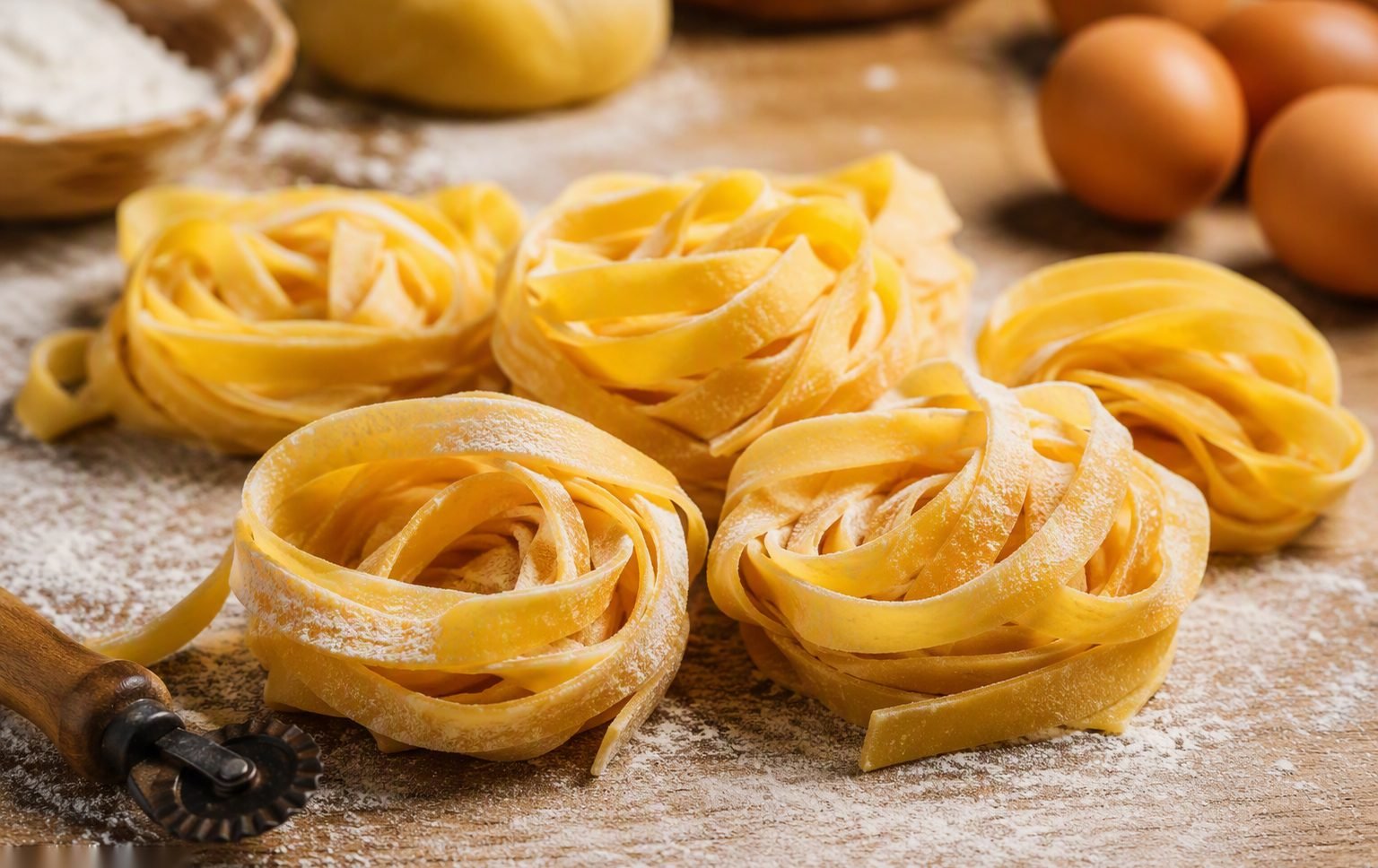
The pasta industry's ingredient reality
Start with an honest boundary: most pasta in the world contains no egg at all. Dried durum semolina pasta — the backbone of the category — is semolina and water, and many noodle traditions use none either. Egg defines specific, premium segments: egg pasta and tagliatelle-style products, egg noodles, enriched fresh pasta, and filled-pasta doughs where richness is part of the promise. If your product is not in those segments, this page will tell you so rather than sell you an ingredient you do not need.
For producers who do make egg pasta, egg is not a minor ingredient — it is the product's identity. The pack declares egg content; the consumer expects golden colour and a rich, resilient bite; and regulators in many markets define what "egg pasta" must contain. That makes egg a compliance ingredient as much as a functional one: the declared content must be hit, verifiably, in every batch. This is where the format question becomes interesting, because powder turns a declaration into an arithmetic exercise.
From Industry Requirement to RFQ
1 · Industry requirement
Typical need: dough strength, colour and texture in pasta and noodle production. Define your process conditions, volumes and destination before selecting an ingredient.
2 · Relevant egg ingredients
Potentially relevant ingredients for evaluation: Whole Egg Powder, Egg Yolk Powder, Liquid Whole Egg. Final selection depends on formulation, process and customer requirements.
3 · Technical information
Review the buyer specification summary and the specification guide; product specifications are provided per product on request.
4 · RFQ
Share your requirement, destination and documentation needs through the RFQ form — or request a sample first.
Where egg ingredients fit in pasta and noodle production
Egg does three visible jobs in pasta dough. Yolk carotenoids produce the golden colour that distinguishes egg pasta on the shelf — a quality cue consumers use instinctively. Egg proteins strengthen and enrich the dough network, contributing the firm, elastic bite that survives cooking. And yolk lipids add the rich flavour that justifies the premium price point. Behind the scenes, egg also changes dough rheology — mixing behaviour, extrusion or sheeting response — which is why composition consistency matters to the line as much as to the label.
Dry dosing fits pasta production unusually well. Semolina already enters the mixer as a dry stream; egg powder joins it directly, and the dough's water addition is set to account for the solids. No liquid ingredient enters the system, no refrigerated storage is needed, and the egg-solids contribution per batch is a simple, auditable multiplication — the property that makes declared egg content defensible.
Direct-answer: why do pasta manufacturers consider egg powder?
Because egg pasta is sold on declared egg content, and powder makes that content exact: standardised egg solids per kilogram dosed, identical in every batch, with documentation to match. It also removes liquid-egg logistics from a plant that otherwise runs entirely on dry ingredients.
Sahya Agro products for pasta & noodles
Whole Egg Powder
The standard egg-pasta ingredient: balanced colour, flavour and protein for egg pasta, egg noodles and enriched doughs.
View product → SpecialistEgg Yolk Powder
For premium products where deeper golden colour and extra richness define the brand — or recipes targeting yolk specifically.
View product → AlternativeLiquid Whole Egg
For fresh-pasta producers within cold-chain range running daily high throughput. Availability [PRODUCT AVAILABILITY TO BE CONFIRMED].
View product →Application breakdown
Dried egg pasta
Dried egg pasta — tagliatelle, fettuccine, pappardelle and shapes — is powder's home ground. Egg powder blends with semolina before hydration; the dough sheets or extrudes as usual, and drying curves are tuned to the recipe. Colour consistency across production runs protects shelf appearance, and standardised egg solids keep the declared content exact. Producers converting from liquid egg should validate water addition and drying behaviour in pilot runs.
Fresh and filled pasta
Fresh pasta and filled-pasta doughs (tortellini, ravioli) use egg for richness, colour and dough elasticity that holds fillings through cooking. Fresh-pasta producers with daily high throughput and chilled infrastructure may evaluate liquid egg; everyone else — and any operation with intermittent production — is better served by powder's shelf life.
Egg noodles
Asian-style egg noodles and Western egg-noodle formats use egg for colour, flavour and the characteristic springy bite. Noodle lines running continuous production value powder's dosing precision and the absence of liquid handling in plants designed around dry ingredient streams.
Where egg is not needed
Standard dried semolina pasta and many noodle types contain no egg by design. Adding egg to products that do not call for it changes identity, cost and allergen declaration — a formulation decision for your R&D team, not something an ingredient supplier should push. We mention it because honest guidance builds better long-term supply relationships than overselling.
Functional considerations for pasta technologists
- Colour consistency — carotenoid content drives golden hue; batch-consistent yolk solids mean consistent product colour across runs.
- Declared egg content — standardised solids make declarations arithmetic and auditable; keep dosing records aligned with pack claims.
- Dough water balance — powder contributes solids without water; adjust hydration at the mixer and lock it into the master recipe.
- Rheology — egg proteins change mixing and extrusion/sheeting behaviour; consistent composition means stable line settings.
- Drying interaction — egg-enriched doughs dry differently from plain semolina; validate drying curves when converting formats.
- Flowability — powder must dose cleanly through dry-ingredient systems; caking indicates moisture exposure and should trigger a lot check.
Powder vs fresh and liquid egg in pasta production
Pasta plants are dry-ingredient factories: silos, pneumatic conveying, precise dry dosing. Liquid egg inserts a cold-chain island into that architecture — chilled storage, sanitary liquid handling, short use windows — while shell eggs add a breaking operation on top. Powder slots into the existing dry stream with none of that. The genuine exceptions are fresh-pasta operations with daily high throughput and existing chilled infrastructure, where liquid egg avoids a rehydration step, and very small artisan producers where shell eggs remain practical. For dried-pasta scale, powder is usually the format the plant architecture was already asking for.
Procurement guide for pasta buyers
- Specification sheet — composition, colour-relevant parameters, moisture and physical standards in writing.
- COA per batch — your declared egg content depends on documented, consistent solids.
- Microbiological standards — pasteurised product with documented pathogen control.
- MOQ and lead time — [ACTUAL MOQ]; plan against production schedules and safety stock.
- Packaging — [PACKAGING TO BE CONFIRMED]; match pack size to batch consumption.
- Documentation — batch identity, traceability, allergen declaration (contains egg — already on your label if you make egg pasta), export papers where applicable.
- Pilot runs — validate mixing, colour and drying before volume commitment.
Quality & food safety: what to evaluate
For an ingredient that appears in your product's legal name, documentation discipline is the first quality criterion: can the supplier produce batch records that support your declared egg content during an audit? Beyond that, evaluate pasteurisation validation, hygienic drying and packing, moisture control through the chain, and retained samples. Colour consistency deserves specific attention — it is the quality attribute your consumers actually see.
Our approach is described on the quality page. Certifications remain [CERTIFICATION TO BE CONFIRMED] until verified documents are published.
Dry-stream ready
[PACKAGING TO BE CONFIRMED] — formats will be matched to your dosing equipment and batch sizes.
With the semolina
Standard dry-ingredient warehouse conditions — cool, dry, sealed, FIFO. No cold room needed.
Dry cargo
No refrigeration; pallet and container configurations confirmed per order — [TO BE CONFIRMED].
Export considerations for pasta manufacturers
Pasta producers outside India source egg powder as dry cargo with batch COA and shipping documentation — the same freight profile as other dry ingredients on the bill of materials. Destination-specific requirements should be raised at enquiry. Verified destination list: [ACTUAL EXPORT MARKETS]. See our global supply page.
Pasta & noodle manufacturer questions
Egg pasta is sold on egg content, colour and bite. Powder lets producers hit declared egg levels with standardised precision, doses dry directly into semolina blending, and eliminates breaking rooms and liquid-egg cold chains from the plant.
No — most dried pasta is made from durum semolina and water alone, and many noodle types use no egg. Egg defines specific premium categories: egg pasta, egg noodles and enriched fresh pasta. We recommend egg ingredients only for products that genuinely call for them.
Egg contributes the golden colour from yolk carotenoids, a richer flavour, and a firmer, more elastic bite from its proteins. It also affects dough handling during mixing and extrusion or sheeting — properties that must stay consistent for the line to run stable.
Whole egg powder covers most egg-pasta recipes with balanced colour, flavour and protein. Egg yolk powder is used where deeper golden colour and extra richness define a premium product, or where the recipe targets yolk specifically.
Powder's standardised solids content makes the calculation exact: a known egg-solids contribution per kilogram dosed, identical in every batch. This is auditable in a way shell-egg breaking — with its natural composition variation — is not.
Egg proteins contribute to the firm, resilient bite egg pasta is known for, and consistent egg solids mean consistent cooking behaviour. Producers converting from liquid egg should validate dough water addition and drying curves in pilot runs.
Colour consistency, composition specs with COA per batch, microbiological standards, flowability for dry dosing, moisture content, packaging integrity, and a pilot run through your actual mixing and drying process.
Cool, dry and sealed with FIFO rotation — the same dry-ingredient warehouse practice as semolina. No refrigeration is required, which simplifies plant layout compared with liquid egg.
[ACTUAL MOQ] — MOQ depends on packaging and destination and is confirmed per enquiry. Samples are available for pilot production runs before any commercial order.
Yes — powder ships as dry cargo with batch COA and export documentation. Our verified export market list is to be confirmed; pasta and noodle manufacturers are welcome to enquire about their destination.
Making egg pasta or noodles?
Share your products, volumes and destination — we respond with specs, samples and pricing.