Traceability from Source to Shipment
The batch thread that connects farm source, production, testing, packaging and dispatch — what each step records, what buyers should verify, and what we can document today.
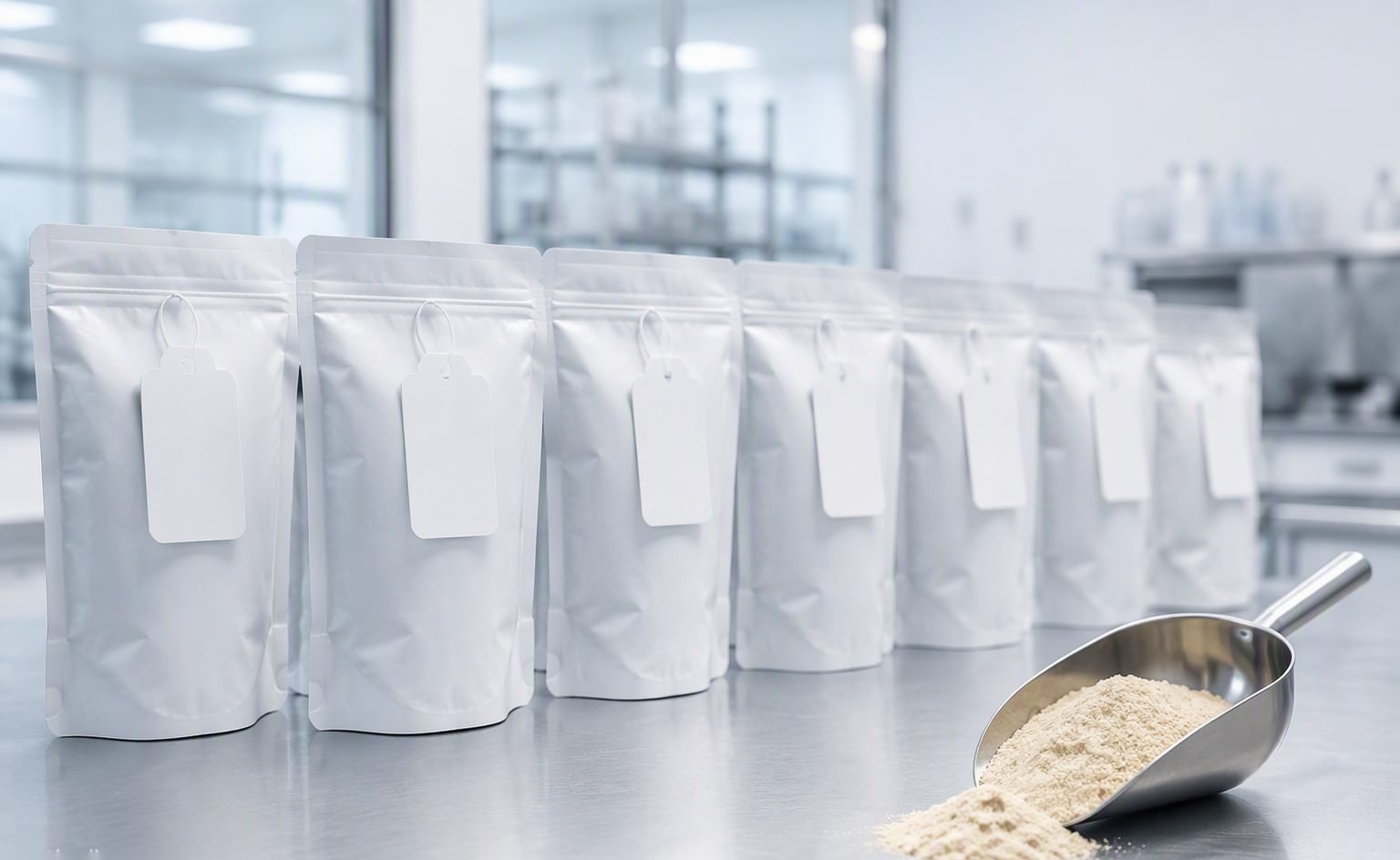
Traceability: the batch thread from source to shipment
Traceability is the ability to answer, for any pack of egg powder: which batch is it, what went into it, how was it processed and tested, and where did it go? For B2B buyers it is not a bureaucratic extra — it is what makes receiving verification, complaint investigation, regulatory queries and any recall action possible. A supplier without batch traceability cannot investigate your complaint; they can only apologise for it.
This page presents the traceability model honestly: the chain as it should run, what Sahya Agro can document at each step today, and visible placeholders — [TRACEABILITY DETAIL TO BE CONFIRMED] — where a specific record type is not yet verified for publication. We do not claim a formal recall system until it is verified.
Seven linked steps, one batch thread
Approved origins
Shell eggs from known, approved sources with supplier records. Source-level detail: [TRACEABILITY DETAIL TO BE CONFIRMED].
Receipt records
Goods-in records: supplier, quantity, date, condition. The batch thread begins before processing does.
Unique identity
A batch code assigned at production, carried on every record and every pack that follows.
Production records
Process records under the batch code: pasteurisation, drying, hygiene checks. Parameters: [PROCESS PARAMETER TO BE CONFIRMED].
Results linkage
Batch samples, laboratory results against specification, retained reference samples.
Pack identification
Every pack labelled with product identity and batch code; COA issued per batch.
Dispatch records
Batch-to-customer linkage: which batches went where, on which shipment, with which documents.
The elements buyers should verify
Batch numbers & production records
The batch code is the key that unlocks every other record. Verify the format is printed legibly on every pack, that it appears identically on the COA and shipment documents, and that the supplier can retrieve the underlying production record on request. A code that cannot be traced to records is decoration. Our coding format is [TRACEABILITY DETAIL TO BE CONFIRMED].
COA linkage
The certificate of analysis must reference the exact batch code on your packs — a COA without matching batch identity cannot verify anything. When your receiving team checks a delivery, the chain pack → COA → test results should close in one step. See the COA guide for the field-level view.
Packaging identification
Every pack should carry product identity, batch code, net weight and date information; pallet or outer packaging should aggregate that identity for warehouse scanning. Labelling details are [PACKAGING TO BE CONFIRMED]; the principle is non-negotiable: no unidentified pack ever leaves a serious plant.
Shipment records
Forward traceability — which batches went to which customer on which shipment — is what allows targeted communication if a question ever arises about a specific batch. Dispatch records link batch codes to consignees and documents; this is the half of traceability buyers rarely check until they need it, and should check first.
Recall & withdrawal concepts
A recall is traceability under pressure: given a suspect batch, identify affected packs, locate them through shipment records, notify customers, and document the action. Serious suppliers test this with mock recalls — a timed retrieval exercise. Sahya Agro does not claim a formal, tested recall system until verified: status [TO BE CONFIRMED]. What exists today is the batch-and-shipment record structure any recall depends on.
Why traceability matters to your business
- Receiving verification — confirm each delivery against its batch documentation before it enters your stock.
- Complaint investigation — a batch code turns your complaint into a record review, not an argument.
- Regulatory compliance — food-law traceability obligations extend through your supply chain; your supplier's records become part of your defence.
- Recall scope control — precise batch records mean a problem is contained to what is affected, not everything you ever bought.
- Continuity analysis — batch history reveals consistency trends that single COAs cannot.
What Sahya Agro can document today
- Batch-identified production and packs.
- Batch-linked certificates of analysis for shipped product.
- Shipment documentation linking batches to consignments.
Source-level detail, coding formats, retained-sample policy and any formal recall procedure are [TRACEABILITY DETAIL TO BE CONFIRMED] / [TO BE CONFIRMED] until verified documentation publishes. During qualification, ask us to demonstrate batch retrieval — we would rather be tested than believed.
Traceability questions
Because everything a buyer might need to do later — verify a delivery, investigate a complaint, answer a regulator, scope a recall — depends on connecting the physical pack to production, testing and shipment records. The batch code is that connection. Without it, quality questions have no answerable address.
Through a batch code assigned at production and carried on processing records, test results, the COA, every pack and the shipment documents. Given any pack, the code retrieves its full record chain; given any batch, shipment records show where it went. The retrieval works in both directions — that is the test of a real system.
At minimum it uniquely identifies the production batch and matches the code on the COA and shipment documents exactly. Some codes encode date or line information; the format matters less than the retrievability behind it. Our coding format is [TRACEABILITY DETAIL TO BE CONFIRMED] until verified documentation publishes.
The COA must reference the exact batch code on your packs — that reference is what turns a generic test report into verification of your delivery. Your receiving check should close the chain pack → COA → results in one step. A COA without batch identity verifies nothing.
We do not claim a formal, tested recall system until it is verified — status [TO BE CONFIRMED]. What exists today is the batch-identified production, COA linkage and shipment-record structure that any recall depends on. Ask us to demonstrate batch retrieval during qualification.
A timed exercise where a supplier takes a batch code and retrieves all affected records and locations, proving the traceability chain works under pressure. Serious suppliers run them periodically; buyers should ask when the last one happened and how long retrieval took. Our exercise records are [TO BE CONFIRMED].
The model chain runs source → raw material → batch → processing → testing → packaging → shipment. How far source-level detail is recorded varies by supplier; our source-level record detail is [TRACEABILITY DETAIL TO BE CONFIRMED]. The batch-to-shipment thread is the operational core buyers rely on daily.
At minimum for the product's shelf life plus a margin — long enough that any pack in the market can still be investigated. Retention periods are typically defined in the supplier's procedures; ours are [TO BE CONFIRMED] until documented procedures publish.
Three things: that every pack carries a legible batch code matching its COA; that the supplier can retrieve production and testing records for a real batch on request; and that shipment records link batches to consignees. A live demonstration with an actual batch beats any policy document.
Want a batch-retrieval demonstration?
Ask during qualification — request specification, samples and a batch documentation walkthrough.