Procurement · Storage
Egg Powder Storage Guide
The warehouse disciplines that protect functionality, shelf life and traceability from receiving dock to production line.
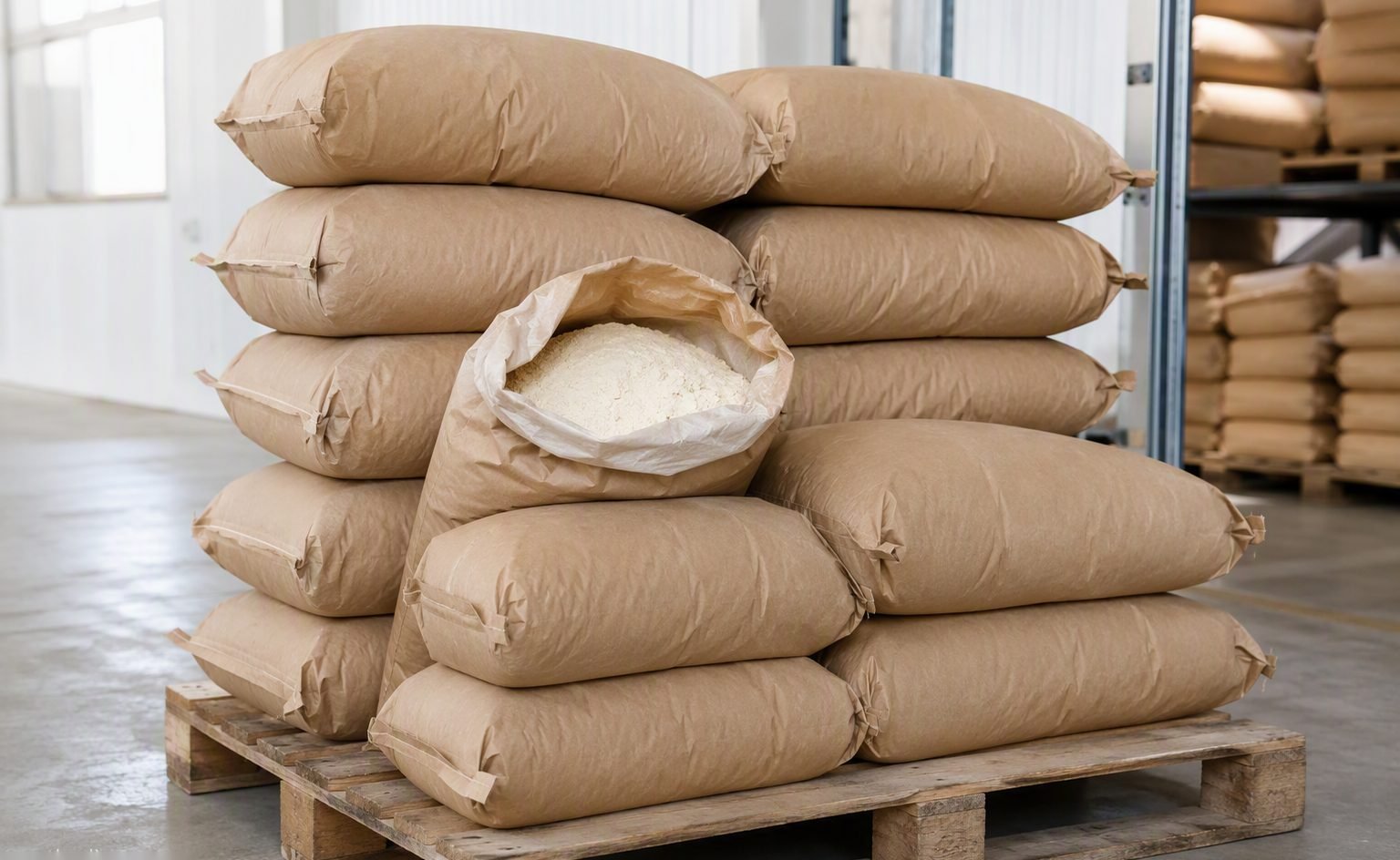
Scope
This guide covers egg powder storage from receiving to daily warehouse discipline: moisture control, packaging integrity, warehouse conditions, contamination prevention, handling, opening and resealing, batch identification, stock rotation and transport considerations. It is practical guidance for buyers' warehouses; Sahya Agro's own storage and packaging policies are at Quality — Packaging & Storage.
Moisture control
Egg powder is hygroscopic: it pulls moisture from the air, and absorbed moisture degrades solubility, whipping performance and flow — and, at the extreme, microbiological stability. Moisture control is therefore the first principle of storage: keep packs sealed until use, keep the storage area dry, and treat any pack that has been wet, damp or long-opened as suspect. If powder has caked, do not assume it is ruined or assume it is fine — quarantine it and check against the specification with your supplier.
Packaging integrity
The moisture barrier is the pack. Inspect packaging at receiving and periodically in storage: tears, punctures, failed seams and water damage all compromise the barrier. Damaged packs should be repacked into clean, sealed, food-appropriate containers or quarantined — never simply stacked back. Pallet wrap, corner protection and careful forklift handling are part of barrier protection, not cosmetics. Packaging formats and what they must achieve: packaging guide.
Warehouse conditions
Store egg powder in cool, dry, clean conditions, off the floor on pallets, away from walls, and away from direct sunlight and heat sources. We deliberately state no exact temperature or humidity figures here: the binding values are those on the product specification — [PROCESS PARAMETER TO BE CONFIRMED] applies until the supplier's document is in hand. If your warehouse cannot reliably hold cool, dry conditions, say so in the RFQ; packaging and order sizing can be planned around it.
Contamination prevention
Egg powder is a food ingredient: store it away from chemicals, allergens with cross-contact risk in your operation, strong odours and pests. Maintain a pest-control programme, keep the storage area clean, and manage personnel hygiene for anyone handling open packs. Foreign-matter prevention in the warehouse is the buyer's half of the food-safety partnership that begins with the supplier's controls — see Quality — Food Safety.
Handling
Handle packs so the barrier survives: no dragging, no knife cuts near the liner when opening outer packaging, no stacking beyond the stated pallet configuration. Decant with clean, dry scoops and equipment; keep scoops dedicated to the ingredient where practicable. Every contact between the pack and your process is an opportunity to add moisture or contamination — engineer it out.
Opening and resealing
Opened packs are the biggest storage risk. Open only what production needs, reseal the inner liner promptly and tightly (fold and clip, tie, or heat-seal where equipment allows), label with the opening date, and return to proper storage immediately. Use opened stock before opening new packs. The usage guide covers the point-of-use side of this discipline.
Batch identification
Every pack carries a batch or lot identity that ties it to its COA. Protect that identity: do not let labels be damaged, covered or separated from packs, and if you repack, transfer the batch identity with the product. Record which batches went into which production runs — that is your traceability link if a question ever arises, and it pairs with the supplier's system described at Quality — Traceability.
Stock rotation
Run first-in-first-out (FIFO), or first-expired-first-out where dates differ across batches. Receiving staff should date-check incoming stock, warehouse layout should make older stock physically easier to pick, and inventory reviews should flag stock approaching the end of its stated shelf life — [PRODUCT-SPECIFIC SHELF LIFE TO BE CONFIRMED] — early enough to use or disposition it deliberately rather than discover it expired.
Transport considerations
Storage discipline extends to transport: keep pallets dry during loading, protect from weather at docks, avoid prolonged staging in hot sun or rain, and maintain pack integrity through the last mile. For inbound international shipments, inspect on arrival before acceptance — the receiving checks in the import-export guide and COA verification in the COA guide close the loop.
Practical takeaways
- Dry is the law. Moisture is the main enemy — sealed packs, dry warehouse, prompt resealing.
- The pack is the barrier. Inspect at receiving and in storage; quarantine or repack damage, never ignore it.
- Specification owns the numbers. Exact conditions and shelf life come from the product document, not from web guidance.
- Batch identity is traceability. Protect labels, record usage by batch, rotate FIFO.
Answers
Storage FAQ
Cool, dry, clean conditions; packaging intact; pallets off the floor; away from sunlight, heat, chemicals and pests; stock rotated FIFO; opened packs resealed promptly and used first. Exact temperature and humidity requirements are product-specific and stated on the specification.
Ambient storage is a core advantage of the format — provided conditions are dry and packaging intact. The binding storage conditions are those on the product specification; we do not publish generic figures.
Moisture degrades solubility, whipping and flow, and at the extreme microbiological stability. Quarantine affected packs and check with your supplier against the specification — do not assume the product is ruined, and do not assume it is fine.
Shelf life is product- and packaging-specific: [PRODUCT-SPECIFIC SHELF LIFE TO BE CONFIRMED]. Rotation discipline (FIFO) and intact packaging are what make the stated shelf life achievable in practice.
Reseal the inner liner promptly and tightly, label with the opening date, return to proper storage, and use opened stock before opening new packs. Never treat reconstituted egg as shelf-stable.
Yes, with food-warehouse discipline: away from chemicals, strong odours, pest risk and unmanaged allergen cross-contact. Clean, dry, organised storage applies to the whole warehouse, not just the egg powder.
Packaging integrity (tears, punctures, water damage), batch identity matching the COA, dates, and pallet condition. Damaged or mismatched stock goes to hold-and-query — the COA guide covers document verification.
Temperature extremes and swings stress packaging and product. Keep conditions within the specification's storage statement, protect stock at docks from weather, and raise persistent warehouse-condition issues in the RFQ so packaging can be planned accordingly.
Protect pack labels, transfer batch identity if repacking, record which batches fed which production runs, and keep the COAs matched to batches on file. That closes the traceability loop the supplier starts.
Work with us
Storage terms belong in the RFQ.
Tell us your warehouse conditions — we plan packaging and order sizing around them.