Packaging & Storage for Egg Powder
Moisture-barrier packaging, seal integrity, batch-identified labelling, dry cool storage and ambient transport — the system that keeps powder quality from our door to your production line.
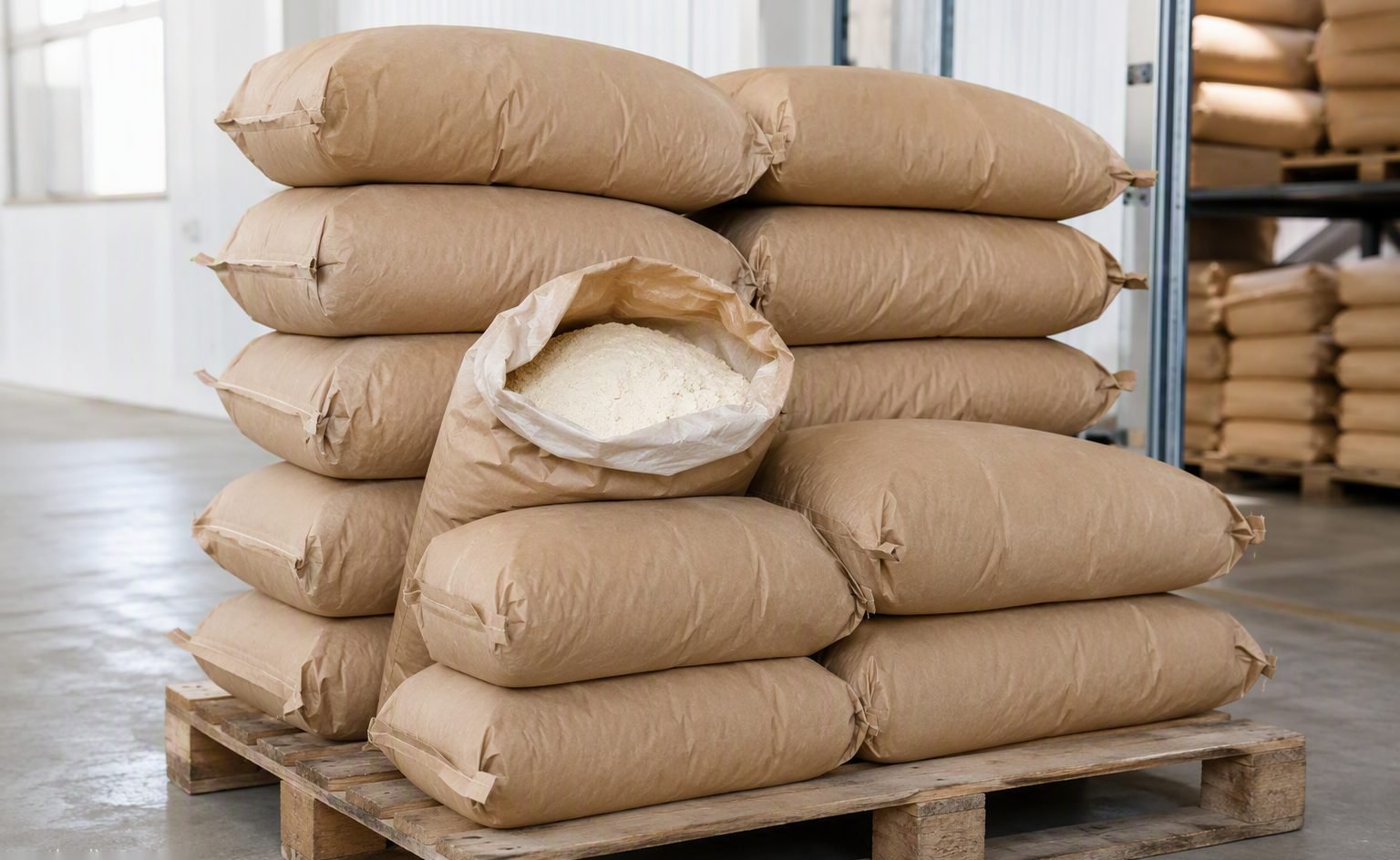
Packaging & storage: where powder quality is kept or lost
Egg powder's great logistics advantage — ambient stability — is entirely conditional: it holds while the pack stays sealed, dry and cool. Packaging is therefore not a shipping afterthought but a quality system in itself: the barrier that keeps moisture out, the label that carries batch identity, and the unit your warehouse handles for months. This page explains what buyers should evaluate in egg-ingredient packaging and storage, with honest placeholders — [PACKAGING TO BE CONFIRMED] — where our specific formats are still being confirmed for publication.
Packaging integrity, moisture & contamination protection
Moisture protection is the primary job. Powder is hygroscopic: it pulls water from humid air, and once it does, caking, flow loss and microbiological margin erosion follow. The pack must be a genuine moisture barrier — multilayer, food-grade, properly sealed — and the seal itself is the critical point: most packaging failures are seal failures. Incoming inspection at your warehouse should treat seal integrity as a first-line check.
Contamination protection is the second job: the pack keeps out foreign matter, pests and odours (powders absorb smells readily, which is why odour-free storage and transport matter), and the packaging material itself must be food-grade and hygienically handled before filling. Packaging stock stored badly becomes the contamination source it was meant to prevent.
Mechanical protection is the third: bags and cartons must survive stacking, palletising, forklift handling and container transport without rupture. Damage in transit is usually discovered at receiving — which is why pack condition belongs on your goods-in checklist alongside the COA review.
Labelling & batch identification
Every pack should carry product identity, batch code, net weight and date information, legibly and durably; outer and pallet-level identification should aggregate the same data for warehouse scanning. The batch code on the pack is the physical end of the traceability thread — if it is illegible or missing, traceability ends at your dock. Labelling specifics: [PACKAGING TO BE CONFIRMED]; destination-market labelling requirements for export are covered in our market guides.
Storage conditions & warehouse practice
The governing conditions are dry and cool: low relative humidity to protect against moisture pickup at any seal weakness, moderate temperatures to protect quality and shelf life, off-floor pallet storage, away from direct sunlight, chemicals and strong odours. We do not publish specific temperature or humidity limits we cannot verify — exact values belong in the technical data sheet [SPECIFICATION TO BE CONFIRMED] — but the direction is unambiguous: the cooler and drier, the longer quality holds.
Warehouse discipline on the buyer side completes the system: first-in-first-out rotation by batch, intact-pack checks on receipt and before use, prompt resealing of opened packs (moisture pickup begins the moment the seal opens), and separation from incompatible goods. Reconstituted product flips the rules entirely — once water is added, treat it as chilled, perishable liquid egg and use it promptly.
Transportation considerations
Egg powder ships as ambient dry cargo — no refrigerated freight needed, which is a genuine cost and complexity advantage over liquid egg. The conditions that matter: clean, dry, odour-free vehicles and containers; protection from weather during loading; intact palletisation; and container inspection before loading for export. For international shipments, route, Incoterms and transit arrangements are confirmed per order [TO BE CONFIRMED] — our export hub explains the documentation side.
Shelf life
Shelf life is a specification statement, valid only together with its storage conditions — a value without conditions is meaningless. Our confirmed shelf-life values publish with the technical data sheet [SPECIFICATION TO BE CONFIRMED]. Until then, any number we printed would be invented, and invented shelf lives are how warehouses end up with expired stock.
Packaging questions for any supplier
- What are the pack materials and barrier properties — and are they food-grade documented?
- How are seals formed and verified, and what is the reject handling for seal failures?
- What identification does each pack and pallet carry?
- What pack formats and sizes are available for your usage rate? [PACKAGING TO BE CONFIRMED]
- What storage conditions and shelf life are stated — together — on the specification?
- How is packaging stock itself stored and controlled before filling?
What Sahya Agro confirms today
- Food-grade, moisture-protective packaging for powder products.
- Batch identification on packs linked to batch documentation.
- Ambient dry-cargo shipment for powder formats.
Specific pack formats and sizes [PACKAGING TO BE CONFIRMED]; storage temperatures, humidity limits and shelf-life values [SPECIFICATION TO BE CONFIRMED] — all confirmed per product during qualification and published when verified. If your operation needs a specific format, ask early: packaging is a qualification topic, not an afterthought.
Packaging & storage questions
Moisture-barrier, food-grade packaging with strong, verified seals — typically multilayer bags protecting against humidity, contamination, odours and handling damage, with legible product and batch identification on every pack. Exact formats and sizes are supplier-specific; ours are [PACKAGING TO BE CONFIRMED] and confirmed per product during qualification.
Powder is hygroscopic — it absorbs water from humid air. Moisture pickup causes caking and flow loss, degrades functionality, and erodes the microbiological safety margin that ambient stability depends on. Barrier packaging, intact seals, dry storage and prompt resealing of opened packs are the controls.
Dry and cool, off the floor on pallets, away from sunlight, chemicals and strong odours, with first-in-first-out rotation by batch. Exact temperature and humidity limits belong in the verified specification [SPECIFICATION TO BE CONFIRMED] — the cooler and drier, the longer quality holds.
No — ambient dry cargo is the product's logistics advantage over liquid egg. What matters is a clean, dry, odour-free vehicle or container, weather protection during loading, and intact palletisation. Export routing and Incoterms are confirmed per order [TO BE CONFIRMED].
Seal and pack integrity (no tears, punctures or moisture damage), legible batch identification matching the COA, correct product identity and quantities, and pallet condition. Pack condition review belongs alongside the COA review on your goods-in checklist — damage found later is harder to attribute.
Shelf life is only meaningful with its storage conditions, and both belong in the verified specification. Our confirmed values publish with the technical data sheet [SPECIFICATION TO BE CONFIRMED] — until then we print no number, because an invented shelf life is how warehouses end up with expired stock.
Yes, with discipline: reseal promptly and tightly, return to dry cool storage, and use first. Moisture pickup starts when the seal opens. For partial-use operations, ask about pack formats matched to your usage rate during qualification [PACKAGING TO BE CONFIRMED].
Yes — once water is added, the powder's ambient stability ends. Treat reconstituted egg exactly like liquid egg: chilled storage, prompt use, no ambient holding. Plan reconstitution quantities against immediate production needs.
Product identity, batch code, net weight and date information on every pack, with pallet-level identification aggregating the same data. Export destinations add market-specific labelling requirements — Arabic elements for Gulf markets, for example — covered per market in our export guides.
Need a specific pack format?
Tell us your usage rate and handling setup — packaging is confirmed per product during qualification.