Quality Control, Layer by Layer
Incoming, in-process and finished-product checks, batch identification, sampling, release and non-conformance — the QC framework your QA team would audit, with industry practice and verified practice kept separate.
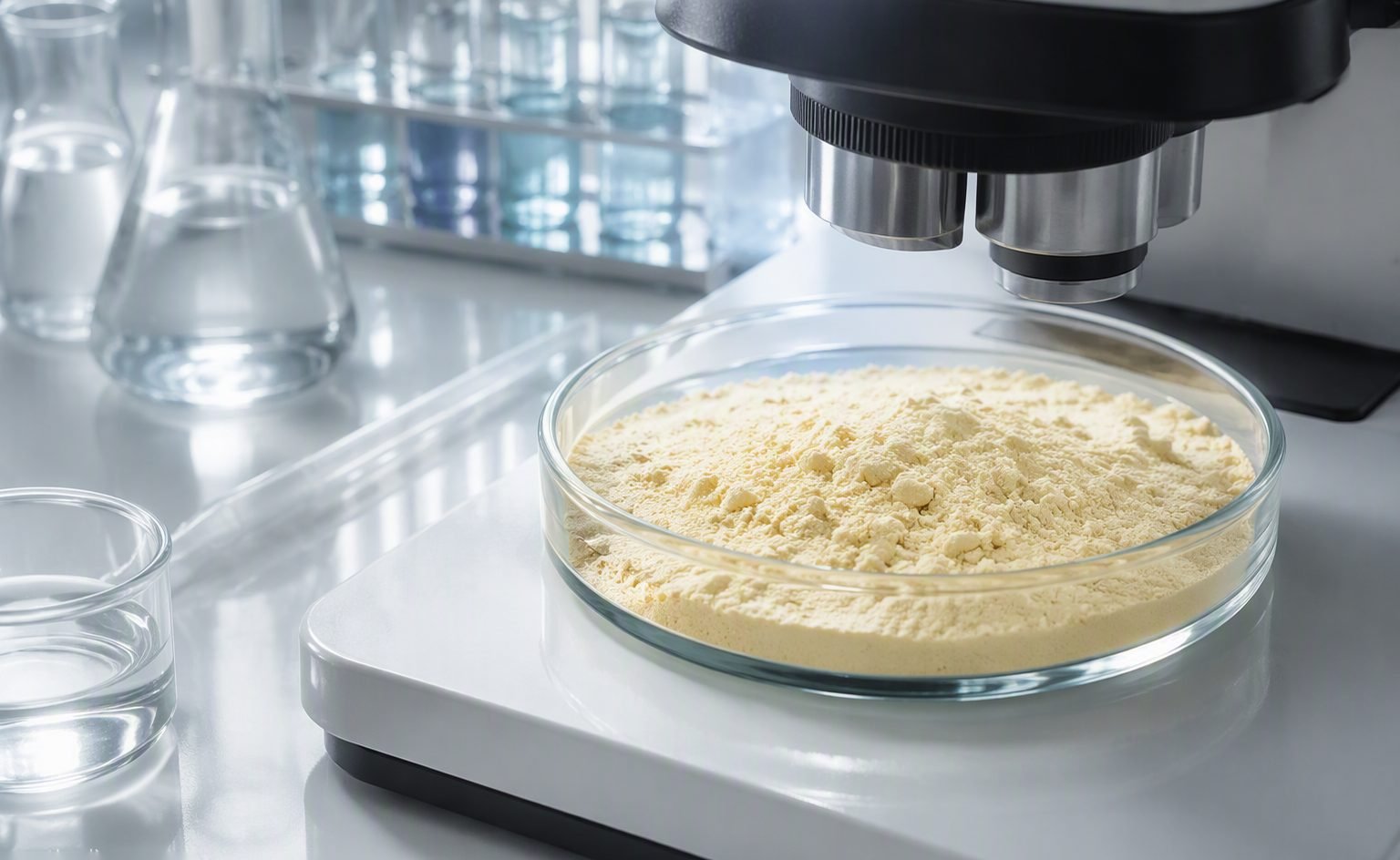
A buyer-oriented quality-control framework
Quality control in egg-ingredient manufacturing is a chain of checks running from the moment raw eggs arrive to the moment a batch is released — with batch identity tying every link together. This page lays out that framework the way your QA team would audit it, and then does something most supplier websites avoid: it separates typical industry control practice from what Sahya Agro can currently evidence, item by item. The two must never blur; a control you cannot document is a control a buyer cannot rely on.
The four control layers
1 — Incoming material checks
Control begins at goods-in: approved-source verification, receipt inspection of shell eggs (condition, hygiene, temperature history), packaging-material checks against food-grade requirements, and rejection criteria for anything out of condition. What enters in poor condition does not leave in good condition; incoming control is the cheapest place to stop a quality problem.
2 — In-process checks
During breaking, filtration, pasteurisation and drying, process checks verify the control points: pasteurisation temperature/time records, liquid handling hygiene, dryer parameters and moisture targets, and hygiene verification between runs. These are the records that demonstrate the process ran as designed for the batch in question — not just that it usually does. Exact parameters and checkpoints: [PROCESS PARAMETER TO BE CONFIRMED].
3 — Finished-product checks
Every batch is sampled and tested against the specification before release: physical characteristics, chemical parameters where relevant, and microbiological criteria. Sampling follows a defined plan — representative samples, defined quantity, retained reference samples — so results mean what they claim to mean. Panels and limits are specification content [TO BE CONFIRMED]; the testing guide explains the categories.
4 — Release documentation
A batch ships only when its records say it passed: the certificate of analysis reporting results against specification, linked by batch number to production and testing records, with defined release authority. Release documentation is where QC becomes visible to you — the COA is the batch's evidence pack. See the COA guide.
Batch identification & sampling
Batch identity is the spine of QC: a unique code assigned at production, carried on processing records, test reports, the COA, every pack and the shipment documents. It is what lets your receiving team verify a delivery, lets a complaint be investigated against records, and lets any corrective action be scoped to what is actually affected. Our coding format is [TRACEABILITY DETAIL TO BE CONFIRMED]; the model is on the traceability page.
Sampling deserves explicit attention because it decides whether testing means anything: representative sampling points, defined sample quantities, hygienic sampling tools, sealed and labelled sample containers, and retained samples held for the shelf life of the batch. A laboratory result is only as good as the sample behind it.
Non-conformance handling
A credible QC system is defined by what it does when something fails, not by claiming nothing ever does. The expected pattern: out-of-specification material is identified and blocked by batch; disposition (rework, downgrade, rejection) is decided under defined authority; root cause is investigated; corrective action is recorded. Buyers should ask to see the non-conformance procedure, not just the pass statistics. Our formal procedure documentation is [TO BE CONFIRMED].
Typical industry control practice
What a mature egg-ingredient QC system generally includes — the benchmark to hold any supplier to:
- Approved-supplier programme for raw eggs and packaging.
- Documented critical control points with monitored records.
- Defined sampling plans and retained reference samples.
- Batch testing against specification before release.
- COA issued per batch under defined release authority.
- Documented non-conformance and corrective-action process.
- Internal audit and management review of quality data.
Sahya Agro's verified current practice
What we can evidence to buyers today — stated conservatively, on purpose:
- Batch-identified production with batch-level documentation.
- Batch certificates of analysis issued for shipped product.
- Written specifications shared during qualification.
- Samples for your independent verification testing.
Formal procedure documents, audit reports and system certifications beyond this are [TO BE CONFIRMED] / [CERTIFICATION STATUS TO BE CONFIRMED] and will be shared or published as they are verified. If your qualification process needs a specific record, ask — the honest answer may be "in progress", and you deserve to hear it.
Quality control questions
Evidence across four layers: incoming material checks (approved sources, receipt inspection), in-process checks (pasteurisation records, hygiene verification), finished-product checks (batch testing against specification), and release documentation (batch COA under defined authority). Ask which layers the supplier can evidence with records today.
Quality control is the operational testing and checking of materials, process and product. Quality assurance is the wider system — procedures, validation, training, audit — that makes those checks meaningful and consistent. Buyers should evaluate both: QC produces the batch's evidence; QA produces confidence the next batch will match.
Batch identification, the parameters tested, actual results, the acceptance criteria they were judged against, test date and release authorisation. A COA that shows results without criteria, or criteria without batch identity, is incomplete. The COA guide walks through it field by field.
Through a defined sampling plan: representative sampling points, hygienic tools, defined quantities, sealed and labelled containers, and retained reference samples held for the batch's shelf life. A test result is only as meaningful as the sampling behind it — ask suppliers about their plan, not just their lab.
In a credible system: the batch is blocked by its identification, disposition is decided under defined authority, root cause is investigated, and corrective action is documented. Ask to see the non-conformance procedure — a supplier claiming zero failures is less credible than one showing a working process for handling them.
At minimum: the specification, batch COAs, and supporting documentation for registration or qualification files. Deeper records — process charts, monitoring data, audit reports — are typically reviewed during qualification or audit visits. Which specific records we can share today: ask; anything unconfirmed is marked [TO BE CONFIRMED].
Formal QMS certifications (ISO 22000, BRCGS and similar) are [CERTIFICATION STATUS TO BE CONFIRMED] until verified certificates publish — we claim none we cannot evidence. Today we offer batch-identified production, batch COAs, written specifications and samples for your independent testing.
That is your risk decision: common practice is full verification testing on initial batches from a new supplier, reduced to periodic verification as COA reliability is demonstrated, with identity and key-parameter checks continuing per receipt. Your QC plan defines it; our COA and retained-sample discipline support it.
A reference sample from each batch, stored for the product's shelf life. If a question arises months later — a complaint, a regulatory query, a verification re-test — the retained sample allows direct re-examination of the exact batch. Ask suppliers whether retained samples are kept and for how long [TO BE CONFIRMED].
Building a supplier QC file?
Request our specification, a batch COA and samples — and test us against this framework.