Using Egg Ingredients in Sauces & Dressings
Emulsification, body and colour — how egg yolk and whole egg work across dressings, spreads, dips and cream-style sauces.
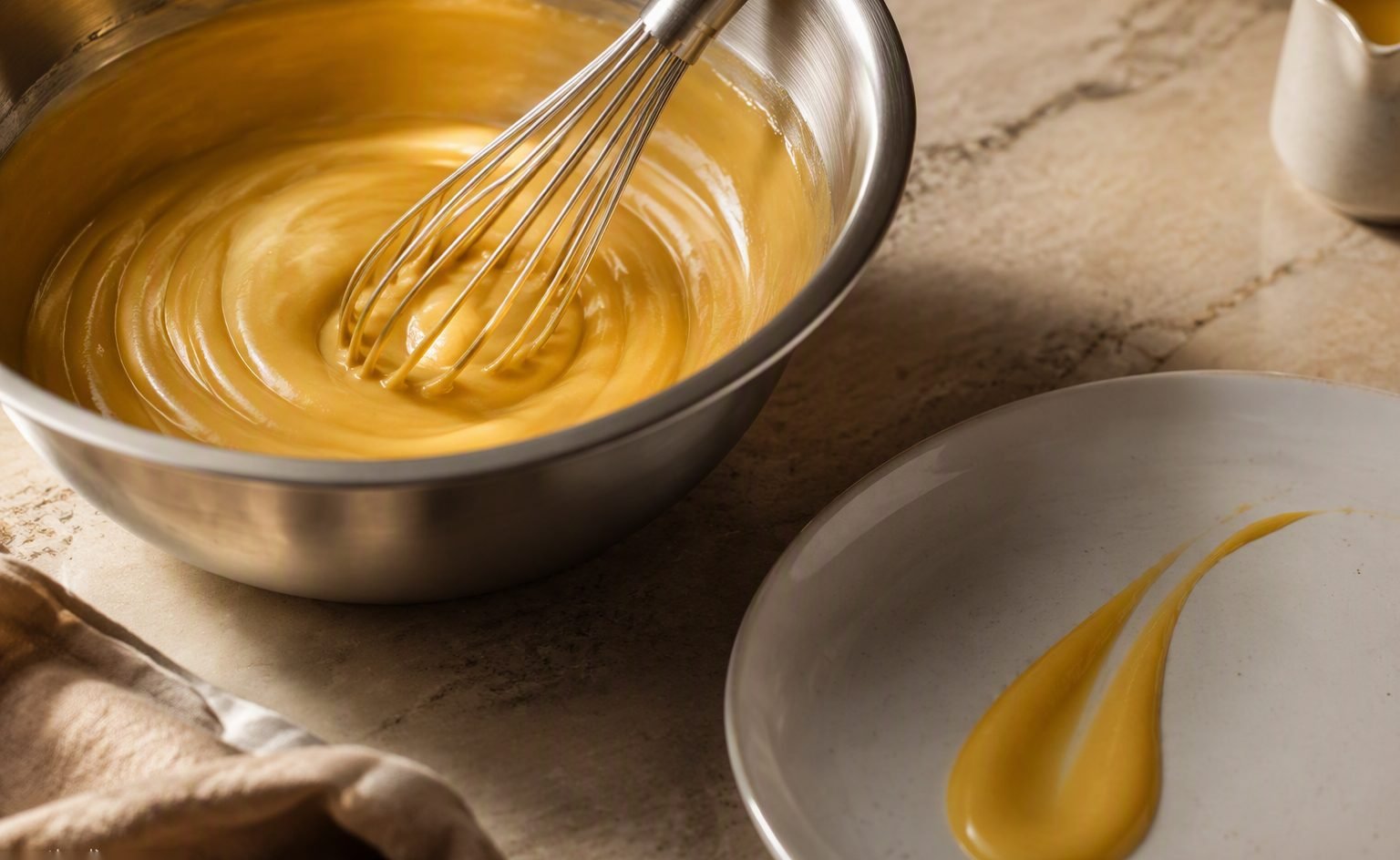
The application: emulsified sauces and dressings
Sauces span an enormous range — pourable salad dressings, sandwich spreads, dips, cooking sauces, cream-style accompaniments — and egg's role varies across them. The common thread is emulsification: many of these products are oil-in-water systems that need an emulsifier to exist at all, and egg yolk is the classic choice wherever a clean, recognisable ingredient declaration matters.
This guide covers egg-containing sauce systems at a technical level: what yolk does, how formulation and processing shape the emulsion, and what to verify when sourcing. Mayonnaise — the extreme case — has its own deep-dive; the buyer-side view of the category lives on the sauces industry page.
Where egg ingredients fit in sauce formulation
Egg yolk enters sauce formulation wherever a stable oil-in-water emulsion must be built without synthetic emulsifiers. In pourable dressings, lower oil levels make the emulsion's job easier; yolk still anchors stability and contributes body. In spoonable dressings and spreads, higher oil and thicker texture lean harder on yolk's interfacial film and the viscosity it helps build. In dips and cream-style sauces, yolk enriches mouthfeel alongside its emulsification role. In cooking and retort sauces containing egg, the thermal process adds a further demand — the emulsion must survive the heat treatment the product's safety requires.
Beyond emulsification, yolk contributes: body and texture (protein and fat add richness and cling), colour (the warm golden tone of yolk-based sauces), and flavour (the rounded, savoury depth consumers associate with traditional recipes). Whole egg appears in leaner systems where its protein-water balance suits the product better than concentrated yolk.
Direct-answer: what does egg do in sauces?
Yolk emulsifies oil into the water phase and keeps it there — the structural foundation of dressings, spreads and dips — while adding body, golden colour and savoury richness. It performs inside a system: acidity, salt, shear and thermal process all shape how well the emulsion holds.
Which Egg Ingredient May Fit?
Potentially relevant ingredients for evaluation include Egg Yolk Powder, Whole Egg Powder and Liquid Egg Yolk. Final ingredient selection depends on formulation, process and customer requirements.
Egg products for sauce production
Egg Yolk Powder
Concentrated emulsification for dressings, spreads and dips — rehydrated into the water phase; dry-store logistics.
View product → PrimaryWhole Egg Powder
For leaner emulsified sauces and cooking sauces where whole egg's protein-water balance fits the product design.
View product → AlternativeLiquid Egg Yolk
Pasteurised and chilled — direct metering for high-throughput sauce plants with cold storage. [PRODUCT AVAILABILITY TO BE CONFIRMED]
View product →Functional considerations in sauce systems
- Emulsification — yolk phospholipids and proteins build the interfacial film that stabilises dispersed oil; emulsifier availability interacts with oil level and shear.
- Texture and body — yolk contributes viscosity and cling; in leaner systems it works alongside starches or hydrocolloids rather than alone.
- Water-phase chemistry — acidity and salt shape both flavour and the protein environment the emulsion lives in; yolk performs within this chemistry.
- Thermal stability — sauces that are hot-filled, pasteurised or retorted place additional demands on the emulsion; yolk-based systems must be validated through the actual thermal process.
- Freeze-thaw behaviour — where products face freezing in distribution, emulsion robustness through freeze-thaw cycles needs honest validation, not assumption.
- Colour and flavour — carotenoid colour and yolk richness are part of the product's identity; dosage moves both.
Formulation considerations
Match the egg fraction to the sauce. High-oil spoonable systems lean on yolk's concentrated emulsifiers; leaner pourable dressings and cooking sauces may suit whole egg's balance. Track emulsifier contribution when changing fractions or formats — emulsion margins depend on it.
Format conversion. Rehydrate yolk or whole-egg powder fully into the water phase before emulsification, per the TDS ratio [SPECIFICATION TO BE CONFIRMED]. Partially dispersed powder under-performs at the interface. Validate conversions through bench and pilot trials measuring what your product cares about: viscosity, stability under your thermal process, and storage behaviour.
The full system decides. Yolk works alongside your acidulant, salt, sweetener, thickeners and process shear. Ingredient changes should be evaluated as system changes — a yolk swap validated in isolation tells you little about the finished sauce.
Processing considerations
Sauce processes vary widely — cold-blend dressings, hot-fill systems, retorted products — and the emulsion's demands scale with thermal severity. Watch oil-incorporation rate relative to shear, batch temperature control, and hold-time effects on viscosity. Yolk format interacts with all three: rehydrated powder must be fully dispersed before shear begins; liquid yolk meters directly. Your process parameters remain yours; these are the variables to monitor during qualification.
Powder vs liquid formats in sauce production
Powder brings dry-store logistics, long shelf life and multi-site standardisation — at the cost of a rehydration step that must be done properly. Liquid yolk skips rehydration and meters directly — natural for plants already running chilled liquid systems, with cold-chain costs attached. Fresh egg has no operational place in industrial sauce production.
Emulsion quality follows formulation and process discipline in either format. Choose on operations — storage, handling, throughput, supply chain — and validate in your own system before committing.
Procurement considerations
- Specification — written parameters per batch; composition consistency underpins emulsion consistency.
- COA per batch — composition and micro results for your QC records.
- Micro standards — validated pasteurisation for an ingredient entering high-moisture products; request documentation.
- Packaging — [PACKAGING TO BE CONFIRMED]; batch-matched sizes.
- MOQ & shelf life — [ACTUAL MOQ]; shelf life per TDS [SPECIFICATION TO BE CONFIRMED].
- Storage & shipping — powder dry cargo; liquid chilled — configurations [TO BE CONFIRMED] per order.
Quality & food safety: what to evaluate
Sauces are high-moisture products where ingredient micro quality is non-negotiable: pasteurisation validation and batch micro results come first. Then evaluate functional consistency — emulsification performance, colour and flavour across lots — in your own bench tests. Batch records and traceability complete supplier assessment.
Our approach is described on the quality page. Certifications remain [CERTIFICATION TO BE CONFIRMED] until verified documents are published.
Sauces application questions
Egg yolk emulsifies oil into the water phase and stabilises it there — the structural foundation of dressings, spreads and dips — while contributing body, golden colour and savoury richness. Whole egg serves leaner emulsified and cooking sauces.
The emulsified family: mayonnaise-type products, salad dressings, sandwich spreads, dips and some cream-style and cooking sauces. Many sauces — tomato-based, soy-based, most hot sauces — contain no egg. Egg's role follows the sauce type.
Yes — rehydrated fully into the water phase per the TDS ratio, yolk powder emulsifies dressings from pourable to spoonable. Validate stability through your actual process (cold-blend, hot-fill or otherwise) in trials.
Through formulation and process working together — emulsifier level, water-phase chemistry, thickeners and the thermal profile all contribute. Yolk-based systems must be validated through the actual thermal process; no ingredient alone guarantees heat stability.
Egg yolk is a recognisable, declaration-friendly emulsifier compared with synthetic alternatives — one reason it anchors traditional sauce recipes. Final claims depend on the complete formulation and your regulatory review.
Yolk delivers concentrated emulsifiers, colour and richness; whole egg delivers a protein-water balance suited to leaner systems. High-oil products lean yolk; lighter dressings and cooking sauces may suit whole egg.
Written specification, COA per batch, validated pasteurisation and micro standards, composition consistency across lots, and emulsification performance in your own bench tests.
Cool, dry, sealed storage; full rehydration into the water phase before emulsification; reconstituted egg treated as perishable — chilled and used promptly.
[ACTUAL MOQ] — MOQ depends on packaging and delivery location and is confirmed per enquiry. Samples are available for formulation trials.
Producing sauces or dressings?
Share your product type, process and volumes — we respond with specs, samples and pricing.