Using Egg Yolk in Mayonnaise Production
The emulsion science behind mayonnaise — what yolk does at the oil-water interface, and how to formulate and process with powder and liquid formats.
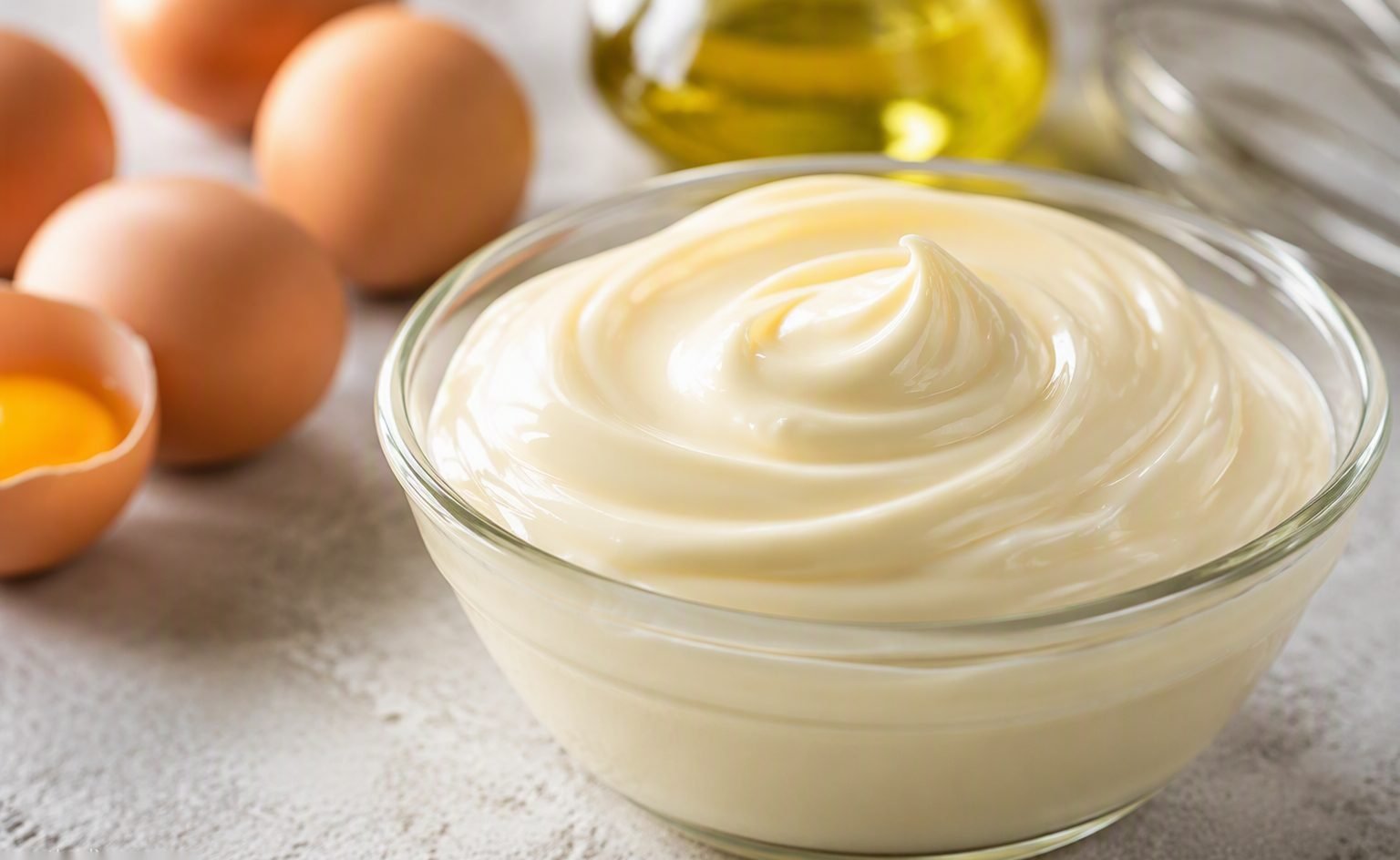
The application: mayonnaise as an emulsion system
Mayonnaise is, technically speaking, a high-fat oil-in-water emulsion — typically the most oil-dense emulsion in everyday food. Keeping that much oil stably dispersed in so little water is a genuine colloid-science achievement, and egg yolk is the classic ingredient that makes it possible. Understanding mayonnaise means understanding what yolk does at the oil-water interface — and what threatens the emulsion once formed.
This page is deliberately technical but responsible: it describes the emulsion science at a level useful for formulators and production teams, without promising exact emulsion performance for any ingredient or recipe. Your formulation, process and raw-material system decide outcomes; this guide explains the levers. For procurement and supplier evaluation, see the mayonnaise industry page; for the wider sauce category, the sauces application guide.
Where egg yolk fits in mayonnaise formulation
An oil-in-water emulsion needs emulsifier molecules that sit at the droplet surface and prevent re-coalescence. Yolk supplies two complementary systems: lecithin and other phospholipids, small surfactant molecules that position rapidly at fresh interface, and yolk proteins and lipoproteins, larger molecules that build a protective film around droplets and contribute to the emulsion's body. The combination — fast interfacial coverage plus a robust film — is why yolk has anchored mayonnaise formulation for generations and why replacing it cleanly is genuinely difficult.
Yolk also contributes beyond emulsification: its pigments give mayonnaise its characteristic pale-gold colour, its fat rounds the mouthfeel, and its flavour compounds are part of the expected taste profile. In the water phase, vinegar's acidity and salt support both flavour and the emulsion's microbiological and physical environment — the system works as a whole.
Direct-answer: which egg ingredient is relevant to mayonnaise?
Egg yolk — as powder rehydrated per the technical data sheet, or as pasteurised liquid yolk. Whole egg appears in some recipes, but yolk's emulsifier concentration is what high-oil mayonnaise systems are built on. Whole-egg use dilutes emulsifier per unit of egg solids, which formulation must account for.
Which Egg Ingredient May Fit?
Potentially relevant ingredients for evaluation include Egg Yolk Powder, Whole Egg Powder and Liquid Egg Yolk. Final ingredient selection depends on formulation, process and customer requirements.
Egg products for mayonnaise production
Egg Yolk Powder
Concentrated yolk solids for emulsification — rehydrate per the TDS into the water phase. Dry-store logistics for the sauce plant.
View product → AlternativeLiquid Egg Yolk
Pasteurised, chilled — ready to meter into the batch for high-throughput plants with cold storage. [PRODUCT AVAILABILITY TO BE CONFIRMED]
View product → SpecialistWhole Egg Powder
For recipes formulated on whole egg — note the lower emulsifier concentration per unit solids versus yolk and formulate accordingly.
View product →Functional considerations: the emulsion mechanics
- Interfacial stabilisation — yolk phospholipids and proteins adsorb at oil droplet surfaces, lowering interfacial tension and forming the film that resists coalescence.
- Droplet size and viscosity — smaller, more uniform droplets (set by emulsification energy and emulsifier availability) give thicker, more stable emulsions. Yolk level interacts with shear here.
- Water-phase chemistry — acidity (from vinegar) and salt influence protein behaviour at the interface and the product's microbiological stability; yolk performs within this chemical environment.
- Colour and flavour — yolk carotenoids for the pale-gold hue; yolk flavour compounds as part of the expected profile.
- Temperature sensitivity — emulsification performance and emulsion stability both respond to temperature during processing; cold breakage and heat stress are classic failure modes.
- Oil-phase volume — the higher the oil fraction, the more the system leans on emulsifier availability and correct incorporation technique; formulation margins thin as oil rises.
These are the mechanics, stated without performance promises: the same yolk at the same dosage can succeed in one formulation-process combination and fail in another. Emulsion outcomes are system properties.
Formulation considerations
Yolk dosage and format conversion. Recipes built on liquid yolk convert to powder via the TDS reconstitution ratio — rehydrate yolk powder fully into the water phase before emulsification begins, since partially hydrated powder performs below its potential. Exact ratios publish with the TDS [SPECIFICATION TO BE CONFIRMED]; treat conversions as starting points and validate emulsion quality in bench and pilot trials.
Emulsifier accounting. When switching between yolk and whole egg — or between yolk formats — track emulsifier contribution, not just egg weight. Whole egg delivers less lecithin per unit of solids; high-oil systems feel that difference first. Reformulation between egg sources is a trials exercise, not arithmetic alone.
The water phase matters as much as the yolk. Vinegar level, salt, any added thickeners or mustard (itself an emulsification aid), and dissolved solids all interact with yolk's interfacial behaviour. Evaluate yolk changes within the complete water-phase recipe.
Processing considerations
Mayonnaise production is emulsification engineering: oil addition rate relative to shear, mixer type (colloid mill, high-shear, continuous systems), temperature control through the batch, and deaeration where required. Yolk format interacts with all of these — rehydrated powder should enter fully dispersed; liquid yolk meters directly. Nothing here prescribes your process parameters; these are the variables to monitor when qualifying a new egg source or format.
Powder vs liquid yolk in mayonnaise production
Yolk powder offers dry-store logistics, long shelf life, and freedom from cold-chain dependence — meaningful for plants without yolk-scale refrigeration and for multi-site standardisation. It requires a proper rehydration step: incomplete dispersion shows up as under-performance at the interface. Liquid yolk meters directly into the batch with no rehydration — natural for high-throughput plants already handling chilled liquids, at the cost of cold-chain logistics and shorter shelf life.
Neither format is universally superior for emulsion quality — a correctly rehydrated powder and a correctly handled liquid both deliver yolk's interfacial chemistry. The decision is operational: storage, handling, throughput and supply-chain shape. Emulsion outcomes follow formulation and process discipline, not format identity.
Procurement considerations
- Specification — written yolk-solids parameters each batch ships against; emulsifier consistency begins with composition consistency.
- COA per batch — composition and micro results for your QC and traceability records.
- Micro standards — validated pasteurisation is non-negotiable for an ingredient entering a high-moisture emulsion; request the documentation.
- Packaging — [PACKAGING TO BE CONFIRMED]; sizes matched to batch usage.
- MOQ & shelf life — [ACTUAL MOQ]; shelf life per TDS [SPECIFICATION TO BE CONFIRMED].
- Storage & shipping — powder dry; liquid chilled; shipping configurations [TO BE CONFIRMED] per order.
- Samples — for bench emulsification trials before commitment.
Quality & food safety: what to evaluate
Mayonnaise is a high-stakes application for ingredient consistency: emulsion failures are batch losses. Evaluate suppliers on pasteurisation validation, micro discipline, composition consistency lot to lot, and — decisively — emulsification performance in your own standard bench test across multiple incoming lots. Traceability and batch records complete the picture.
Our approach is described on the quality page. Certifications remain [CERTIFICATION TO BE CONFIRMED] until verified documents are published.
Mayonnaise application questions
Egg yolk — its lecithin and proteins stabilise the oil-in-water emulsion. Both yolk powder (rehydrated per the technical data sheet) and pasteurised liquid yolk serve commercial production. Whole egg appears in some recipes but delivers less emulsifier per unit of solids.
Yolk's phospholipids (including lecithin) and proteins position at oil droplet surfaces, forming the interfacial film that keeps oil stably dispersed in water. Yolk also contributes the pale-gold colour, rounded mouthfeel and part of the expected flavour.
Yes — when fully rehydrated into the water phase per the TDS ratio before emulsification. Incomplete dispersion under-delivers at the interface, so rehydration discipline is the critical handling step. Validate emulsion quality in bench and pilot trials when converting.
Classic causes: oil added faster than shear and emulsifier could stabilise it, insufficient emulsifier for the oil fraction, temperature stress (cold or heat), or formulation chemistry shifts. Emulsion failure is a system property — diagnose across formulation, process and ingredient together.
Some recipes use whole egg, but its emulsifier concentration per unit of solids is lower than yolk's. High-oil systems are built on yolk for that reason; switching between egg sources requires reformulation trials, not a straight substitution.
Dosage depends on oil content, recipe chemistry and target texture — there is no universal number, and any figure would need validation in your specific formulation. Work from your current recipe baseline and adjust through trials; our TDS provides composition data for the arithmetic [SPECIFICATION TO BE CONFIRMED].
Written specification, COA per batch, validated pasteurisation and micro standards, composition consistency lot to lot, and emulsification performance in your own standard bench test across multiple lots.
Cool, dry, sealed storage; reseal opened packs promptly. Rehydrate fully into the water phase with adequate mixing before emulsification begins. Reconstituted yolk is perishable — treat it like liquid yolk.
[ACTUAL MOQ] — MOQ depends on packaging and delivery location and is confirmed per enquiry. Samples are available for bench emulsification trials.
Yes — suppliers in the market offer heat-stable (thermostable) yolk powders designed for high-temperature, high-shelf-life mayonnaise processing. Sahya Agro's standard yolk formats are documented on the egg yolk powder page; speciality-variant availability is to be confirmed — mention your process temperature and oil ratio in your RFQ and we will confirm the best honest option.
Producing mayonnaise or dressings?
Share your formulation context, process and volumes — we respond with specs, samples and pricing.