Using Egg Ingredients in Desserts
Custard gels, baked structure, aerated foams — how egg proteins work across dessert systems, and where powder formats fit.
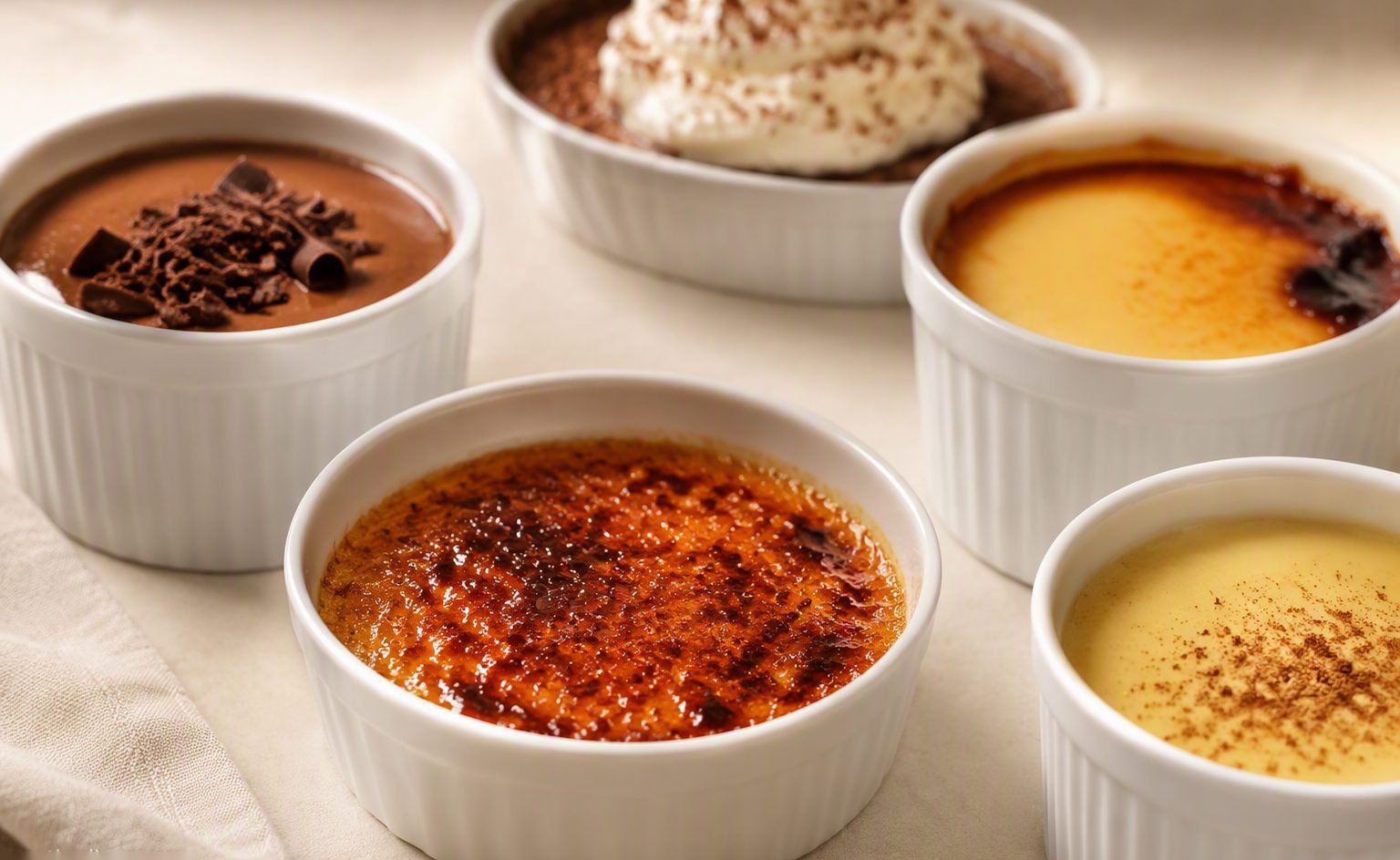
The application: desserts and dessert systems
Desserts are a broad church — custards and puddings, crème-style products, baked desserts like flans and cheesecakes, mousses and aerated desserts, dessert premixes and fillings. Egg's role varies enormously across them: indispensable in custard systems, structural in baked desserts, functional in aerated products, absent from many others (most jellies, sorbets, starch-only puddings). This guide covers the egg-containing family, with the honesty that large parts of the dessert aisle use no egg at all.
What unifies egg-based desserts is protein functionality: custard gels, baked structure and whipped foams are all egg-protein systems with different water, sugar and fat environments. For related bakery systems see cakes and baking; for the buyer-side view, the bakery and food processing industry pages.
Where egg ingredients fit in dessert systems
Custard-style products are egg-protein gels: heat unfolds and links egg proteins through the milk phase, thickening the liquid into a spoonable or sliceable set. Yolk's contribution dominates — the classic custard is essentially a yolk gel — with whole egg serving firmer baked custards. Sugar and starch modify the gel's setting temperature and firmness, which is why custard formulation is a balancing act between egg, sugar and any added starch.
Baked desserts — flans, crème caramels, baked cheesecakes, bread puddings — rely on egg coagulation through the bake for their final structure, much as cakes do but in higher-moisture systems. Aerated desserts — mousses, soufflés, meringue-based components — lean on whipped albumen or whole-egg foams for their lightness. Creams and fillings — pastry cream, crème pâtissière, dessert fillings — use yolk for thickening, emulsification and richness. Dessert premixes carry egg in dry form, where powder is the only practical format.
Direct-answer: what does egg do in desserts?
Depending on the dessert: it gels custards (yolk protein setting with heat), structures baked desserts (coagulation through the bake), aerates mousses (whipped foams), and enriches creams and fillings (thickening, emulsification, flavour). Egg powders deliver these functions in dry format — essential for premixes, convenient for everything else.
Which Egg Ingredient May Fit?
Potentially relevant ingredients for evaluation include Egg Yolk Powder, Whole Egg Powder, Egg White Powder, Liquid Egg Yolk and Liquid Egg White. Final ingredient selection depends on formulation, process and customer requirements.
Egg products for dessert production
Whole Egg Powder
For baked desserts, firmer custards, premixes and general dessert systems — balanced protein and richness.
View product → PrimaryEgg Yolk Powder
The custard ingredient — thickening, emulsification, colour and richness for crème-style products, pastry creams and fillings.
View product → SpecialistEgg White Powder
Whipping functionality for mousses, soufflés and meringue-based dessert components.
View product → AlternativeLiquid Egg Yolk
Pasteurised, chilled — for dessert plants with high-throughput custard production and cold storage. [PRODUCT AVAILABILITY TO BE CONFIRMED]
View product →Functional considerations in dessert systems
- Gel formation — egg proteins set with heat into custard gels; sugar raises the setting temperature, starch modifies firmness, acid threatens the gel. Custard formulation is managing these interactions.
- Emulsification — yolk lecithin stabilises the fat-water systems of creams and fillings, supporting smooth texture.
- Aeration — whipped albumen foams lighten mousses and soufflés; foam stability through folding and setting is the product.
- Colour — yolk carotenoids give custards and creams their golden warmth; dosage and process set the final hue.
- Flavour and richness — yolk's flavour compounds and fat define the expected taste of custard-style desserts.
- Thermal sensitivity — egg-protein gels are heat-formed and heat-limited: overcooking weeps and scrambles, undercooking fails to set. Process control is part of the formulation.
Formulation considerations
Format conversion in gel systems. Custard and baked-dessert systems are sensitive to egg-solids level because the gel is the product. Convert via the TDS reconstitution ratio [SPECIFICATION TO BE CONFIRMED], then validate setting behaviour, firmness and syneresis in bench trials through your actual thermal process — retort, bake, or fill-and-set.
Premixes are powder's home ground. Dessert premixes and instant custard mixes carry egg exclusively in dry form; the consumer's or kitchen's added water reconstitutes the system. Powder composition consistency is what makes a premix perform identically batch after batch.
Sugar, acid and starch interactions. High sugar protects proteins during heating but delays setting; acid (fruit desserts) can destabilise egg gels; added starches change firmness and mouthfeel. Egg changes should be evaluated within these interactions, not in isolation.
Processing considerations
Dessert processes are thermal processes: cooking kettles for custards, ovens for baked desserts, whipping and folding for aerated products, retort or hot-fill for shelf-stable lines. Egg functionality is realised or destroyed in these steps — monitor setting temperatures, hold times and cooling curves during qualification. Reconstituted egg remains perishable; treat it with liquid-egg discipline.
Powder vs liquid vs fresh in dessert production
Powder is structurally necessary for premixes and convenient everywhere else: dry-store logistics, long shelf life, exact scaling, standardised composition. Liquid egg suits high-throughput custard and dessert plants with cold storage — no rehydration step, direct metering. Fresh egg belongs to patisserie kitchens, not production lines.
For gel systems specifically, the validation burden sits on your trials regardless of format: a correctly rehydrated powder and a correctly handled liquid both deliver the proteins the gel needs. Choose on operations; verify on set, texture and flavour in your own process.
Procurement considerations
- Specification — written parameters per batch; gel consistency begins with composition consistency.
- COA per batch — composition and micro results for your QC records.
- Micro standards — validated pasteurisation for high-moisture dessert systems; request documentation.
- Packaging — [PACKAGING TO BE CONFIRMED]; sizes matched to batch usage.
- MOQ & shelf life — [ACTUAL MOQ]; shelf life per TDS [SPECIFICATION TO BE CONFIRMED].
- Storage & shipping — powder dry cargo; liquid chilled — configurations [TO BE CONFIRMED] per order.
Quality & food safety: what to evaluate
Desserts are high-moisture, often minimally processed products — ingredient micro quality and pasteurisation validation are the first evaluation items. Then functional consistency: gel-setting behaviour, colour and flavour across lots in your own bench tests. Batch records and traceability complete the picture.
Our approach is described on the quality page. Certifications remain [CERTIFICATION TO BE CONFIRMED] until verified documents are published.
Desserts application questions
Depending on the dessert: egg proteins gel custards with heat, structure baked desserts through coagulation, aerate mousses as whipped foams, and enrich creams and fillings with thickening, emulsification, colour and flavour.
No — many desserts use no egg at all (jellies, sorbets, starch-set puddings, most gummies). Egg defines the custard, baked-dessert, mousse and cream-filling families. This guide covers those egg-containing systems.
Egg yolk — the classic custard is essentially a yolk-protein gel, with yolk's thickening, colour and richness defining the product. Whole egg serves firmer baked custards. Both are available as powder for dry-format production.
Yes — rehydrated per the TDS ratio, yolk and whole-egg powders set custard gels through the same protein chemistry as liquid egg. Validate setting behaviour, firmness and syneresis through your actual thermal process in trials.
Extensively — premixes and instant custard mixes carry egg exclusively in dry form, so powder is the standard format. Composition consistency is what makes a premix perform identically batch after batch.
As the foam source: rehydrated albumen whips into the stable foams that lighten mousses and meringue-based components. Foam stability through folding and setting should be validated in your specific system.
Classic causes: under-setting (insufficient heat for the protein gel), overcooking (gel breakdown and syneresis), acid destabilisation, or egg-solids imbalance. Custard gels are heat-formed and heat-limited — diagnose across formulation and thermal process together.
Written specification, COA per batch, validated pasteurisation and micro standards, gel and whipping performance in your own tests, and composition consistency across lots.
[ACTUAL MOQ] — MOQ depends on packaging and delivery location and is confirmed per enquiry. Samples are available for bench and pilot trials.
Producing desserts?
Share your dessert systems, process and volumes — we respond with specs, samples and pricing.