Testing & Analysis for Egg Ingredients
Microbiological, chemical and physical test categories — what each verifies, how buyers should use the data, and why limits belong in verified specifications rather than on web pages.
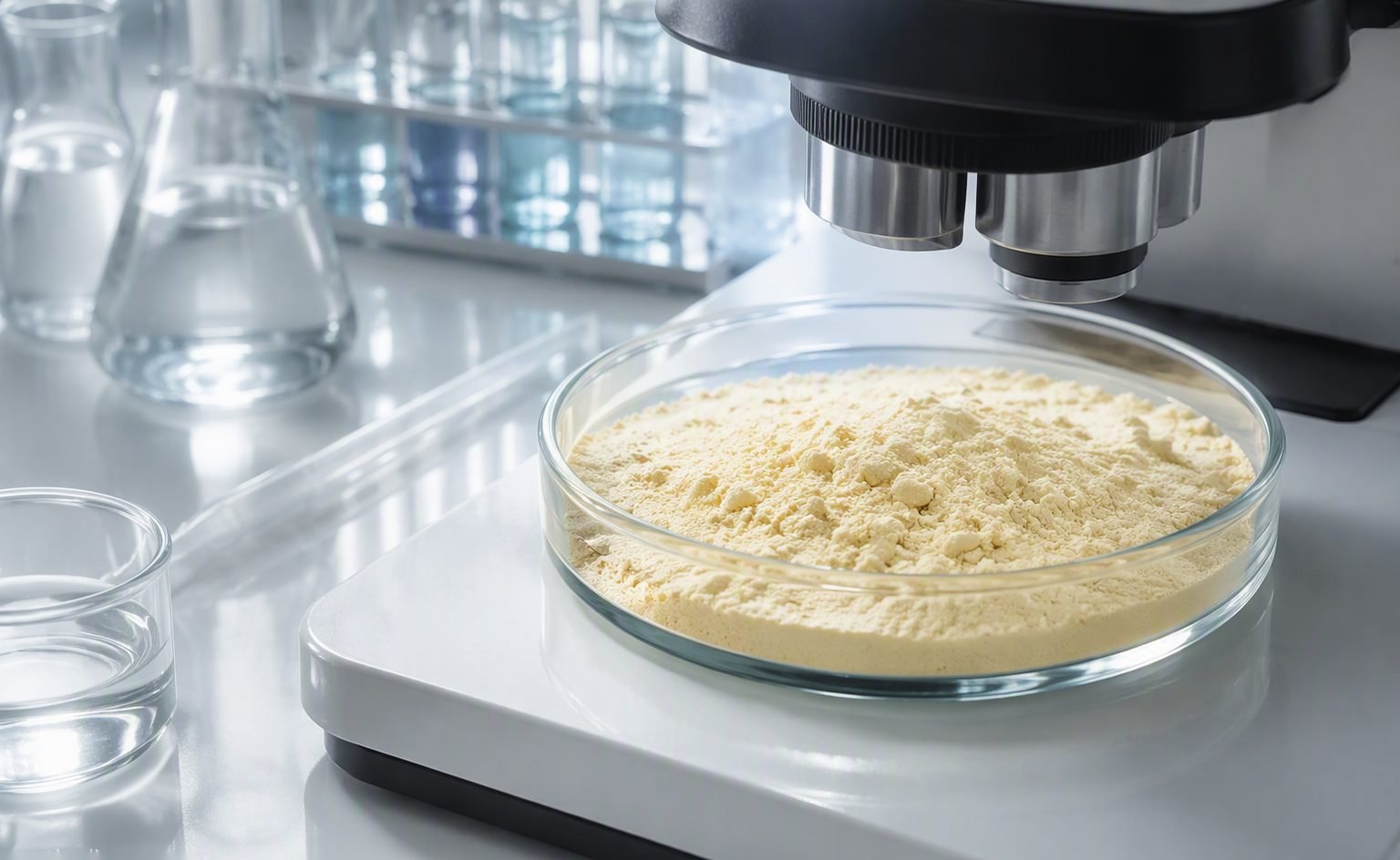
Testing categories for egg ingredients
Testing is how specifications stop being promises. For egg ingredients, relevant analysis falls into three families — microbiological, chemical and physical — and the useful buyer question is not "do you test?" but "which parameters, against which criteria, reported how?" This page explains the categories so your QA team can ask precisely that. Two ground rules apply throughout: no numeric limits appear here, because limits belong in verified specifications [TO BE CONFIRMED]; and not every parameter applies to every egg product — the product type decides the panel.
Microbiological testing
Pathogen testing verifies the safety outcome. Salmonella is the organism of concern for egg products worldwide — the reason pasteurisation exists — and absence testing on defined sample quantities is the classic batch criterion. Other pathogens may appear in panels depending on market and product requirements.
Indicator organisms verify hygiene rather than safety directly: total plate counts, Enterobacteriaceae, coliforms, yeasts and moulds are used as process-hygiene signals. A rising indicator trend warns before a pathogen failure does, which is why trend data matters more than any single result.
What we deliberately do not publish here: numeric limits. Microbiological criteria are commercial-specification content — agreed between supplier and buyer, referenced on the COA, and meaningful only with the method and sample size attached. Our criteria publish with verified specifications [TO BE CONFIRMED].
Chemical testing
Chemical parameters define composition and stability — where relevant to the product:
- Moisture — the critical stability parameter for powders: too high and shelf life, flow and microbiological margin all suffer. Every egg powder specification includes it.
- Protein — the identity and functionality parameter: whole egg, white and yolk powders differ characteristically, and protein content verifies you are buying what you think you are buying.
- Fat — the mirror parameter: high in yolk powder, minimal in albumen, intermediate in whole egg. Together, protein and fat define the product's compositional identity.
- Other product-specific parameters — pH, ash, or others may be relevant per product and application. These are defined per specification, not assumed from a generic list.
Values appear only in verified specifications: [SPECIFICATION TO BE CONFIRMED]. Compositional documentation supports your own labelling and declaration arithmetic — your regulatory team reconciles declared content with the specification's values.
Physical & functional testing
- Appearance — free-flowing powder, absence of foreign matter, lumps or discolouration; the first check your receiving team performs without a laboratory.
- Colour — characteristic per product: pale for albumen, rich yellow for yolk-containing products. Meaningful against a reference or agreed description, not in the abstract.
- Particle characteristics — particle size and structure influence dispersibility, dusting and dosing behaviour on your line.
- Solubility & functionality — where applicable: how completely and quickly the powder hydrates, and functional behaviour relevant to the product — whipping for albumen, emulsification for yolk, gelation in reconstituted systems. Functional checks bridge the gap between chemistry and your application.
Not every parameter applies to every product: whipping metrics belong to albumen specifications, emulsion behaviour to yolk, and some parameters are verified in application trials rather than laboratory numbers. Our application guides describe what each product does in use; the specification defines what is tested at release.
How buyers should use test data
- Qualification — full-panel verification of initial batches, ideally in your own or an independent laboratory, against the offered specification.
- Receiving — per-batch COA review against specification criteria; identity and key-parameter checks per receipt.
- Periodic verification — scheduled re-testing as the relationship matures, scaled to demonstrated COA reliability.
- Trend review — batch-to-batch consistency over time reveals more than any single result; ask for history, not snapshots.
What Sahya Agro provides today
- Batch certificates of analysis for shipped product.
- Written specifications during qualification.
- Samples for your independent and application testing.
Test panels, methods and numeric limits publish with verified specifications [TO BE CONFIRMED]. We do not name laboratories, accreditations or results we cannot evidence — laboratory accreditation status is [CERTIFICATION STATUS TO BE CONFIRMED] until verified. Your independent testing of our samples is welcome; that is what samples are for.
Testing questions
Three families: microbiological (pathogen testing such as Salmonella, plus indicator organisms for hygiene verification), chemical (moisture, protein, fat and product-specific parameters) and physical (appearance, colour, particle characteristics, solubility and functional behaviour). The exact panel is defined per product in the specification.
Pathogen testing relevant to egg products — Salmonella is the organism of concern — plus indicator-organism testing (plate counts, Enterobacteriaceae, yeasts and moulds) as hygiene verification. Numeric limits are specification content and publish only when verified [TO BE CONFIRMED].
Moisture governs stability: excess water shortens shelf life, degrades flow and dosing, and erodes the microbiological margin that makes powder safe at ambient storage. It is the one chemical parameter every egg powder specification must define — and every receiving check should review.
Yes, characteristically: albumen powder is protein-dominant with minimal fat; yolk powder is fat-rich with its emulsifying components; whole egg powder sits between. Together the two values verify compositional identity — that the product is what its label claims. Exact values are specification content [SPECIFICATION TO BE CONFIRMED].
Appearance and colour against reference, particle characteristics affecting handling, and solubility or dispersibility for use. Functional behaviour — whipping for albumen, emulsification for yolk — is often best verified in application trials rather than single laboratory numbers. Not every parameter applies to every product.
Yes — full-panel verification on initial batches from any new supplier, then periodic verification scaled to demonstrated COA reliability, with identity and key-parameter checks continuing per receipt. We provide samples precisely so your laboratory can test us before you trust us.
They should be: a limit without a method and sample size is ambiguous. Specifications typically reference recognised methods for each parameter. Our method references publish with verified specifications [TO BE CONFIRMED].
We do not name laboratories or claim accreditations we cannot evidence. Laboratory arrangements and any accreditation status are [CERTIFICATION STATUS TO BE CONFIRMED] until verified documentation publishes. Batch COAs for shipped product are provided regardless.
Align the specifications first — same parameters, methods and sample definitions — then compare batch histories, not single COAs. Consistency trends over multiple batches separate reliable suppliers from lucky ones.
Want to test us first?
Request samples and specification — run your own panel before any commitment.